
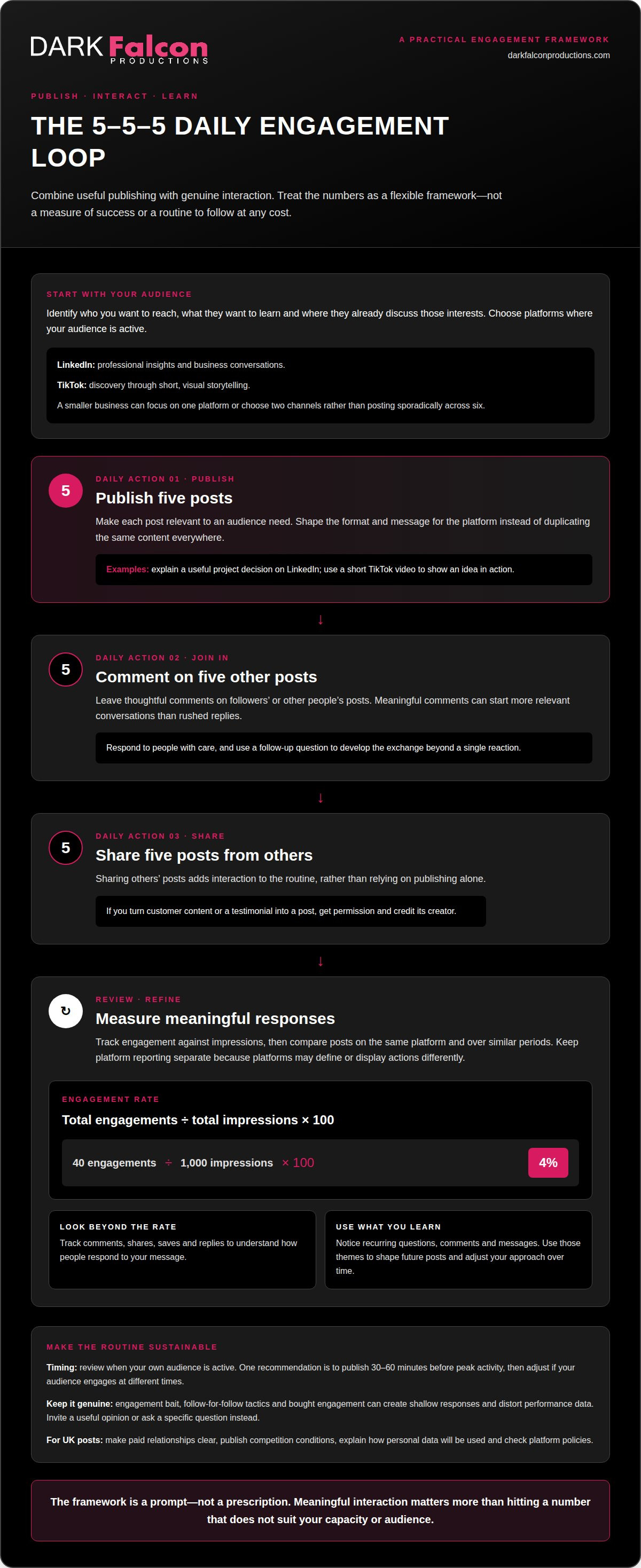
More posts don’t automatically create more conversation. The 5-5-5 rule offers a practical structure for how to increase social media engagement organically: publish five posts daily, leave five comments on other people’s posts and share five posts from others. Treat it as a framework, not a universal prescription; meaningful interaction matters more than following a routine that doesn’t suit your capacity or audience.
It’s easy to focus on likes and reach, but engagement is a two-way exchange. Share something relevant that people can respond to, then reply thoughtfully to turn those responses into an ongoing conversation.
This guide explains what the 5-5-5 approach means and how to adapt it to your social media goals. You’ll learn how to create authentic, platform-specific content, make interaction part of your publishing routine, and measure engagement so you can refine what you share. The aim is a consistent approach built around your audience, not a stream of posts for its own sake.
Key Takeaways
- Use the 5-5-5 rule as a flexible prompt for publishing, commenting and sharing, then adapt it to your audience and capacity.
- Choose platforms based on where your audience is active, and shape each post to suit the platform rather than simply duplicating content.
- Track engagement against impressions and test different formats or approaches to learn what resonates with your audience.
- Build engagement as a two-way exchange: invite meaningful responses and make thoughtful replies part of your social media routine.
1. What is the 5-5-5 rule on social media?
The 5-5-5 rule is a daily routine: publish five posts, leave five comments on followers’ posts, and share five posts from others. It combines publishing with interaction, rather than treating engagement as a reward for posting alone. Use it as a framework, not a measure of success in itself. Five thoughtful comments can start more relevant conversations than five rushed replies.
Choose platforms based on your audience. Identify who you need to reach, what they want to learn and where they already discuss those interests. LinkedIn may suit professional insights and business conversations; TikTok may suit discovery through short, visual storytelling. A smaller business can focus on one platform or choose two channels rather than posting sporadically across six.
Match each format to the platform and your content. A useful LinkedIn post might explain a project decision, while a short TikTok video could show an idea in action. Social listening offers another signal: note recurring questions, comments and messages, then shape future posts around those themes. This keeps your content relevant to your audience’s interests.
Consistency matters more than copying a generic timetable. Review when your own audience is active, then schedule posting around those periods. One recommendation is to publish 30-60 minutes before peak activity. Track responses over time, and adjust the timing if your audience engages at different points. A regular schedule also gives people a clearer expectation of when to hear from you.
For UK posts, make paid relationships clear, publish competition conditions and explain how personal data will be used. Check platform policies before publishing, too. For example, a competition post should explain how to enter and what happens next.
Engagement bait, follow-for-follow tactics and bought engagement can generate shallow responses and distort performance data. Instead of asking for arbitrary likes, invite a useful opinion or pose a specific question. Genuine interaction helps reveal what your audience values; inflated counts do not offer the same insight.
2. Creating compelling, authentic, platform-specific content
Start with one audience need and build a post around it. On LinkedIn, explain a useful lesson or decision; on Instagram, show the process through a Reel or carousel. TikTok suits concise demonstrations and stories with a clear opening. A short-form video of about 30 seconds can focus on one idea, rather than squeezing several messages into one clip.
Give people a clear reason to respond. Ask a specific question, use an Instagram poll to learn about preferences, or invite customers to share how they use a product. With permission, turn user-generated content or a customer testimonial into a post and credit its creator. Reply to comments with follow-up questions to develop the interaction beyond a single reaction.
Choose formats for each platform instead of sharing the same file everywhere. Reels can show a quick transformation; Instagram carousels can break a process into clear steps; LinkedIn documents can present a practical framework. These are starting points, not guaranteed winners. Review analytics to see which formats earn meaningful comments, saves and shares from your intended audience.
Plan a consistent schedule around the ideas you can sustain. A 90-minute interview with a subject expert can provide material for short-form videos across a quarter. Turn one central insight into a video, a written post and a carousel, then give each version a platform-specific opening and message. This creates variety without making every post from scratch.
AI tools can help draft captions, suggest themes or adapt a message for different platforms. Keep a person responsible for checking accuracy, tone and relevance; personalisation should reflect real audience interests, not invented details. Use keywords that describe the post naturally, and keep captions clear. Hashtags can aid discovery, but they cannot replace useful content. Instagram allows up to 30 hashtags in a caption; Facebook posts can use one or two. For short-form video, Stories and live streams, choose a format that suits the message, then use polls or questions to invite replies.
No format is guaranteed to perform best. Try lessons or practical-framework documents on LinkedIn, process Reels or carousels on Instagram, and concise demonstrations or stories on TikTok. Review analytics to find which formats earn meaningful comments, saves and shares from your intended audience.
3. Engagement rate measurement and experimentation
Set a measurable goal before changing your content. For example, aim to increase post engagement by 20% in three months, or gain 500 followers in six weeks. These are examples, not universal targets. Choose an outcome that supports a business objective, such as starting relevant conversations or strengthening relationships with prospective customers. To understand how to increase social media engagement organically, connect each target to an action your audience can take.
Calculate engagement rate by dividing total engagements by total impressions, then multiplying by 100. For example, if a post receives 40 engagements from 1,000 impressions, its rate is 4%. Compare posts on the same platform and over similar periods. Instagram, Facebook and LinkedIn may define or display actions differently, so keep each platform’s reporting separate.
Meaning matters as much as the rate. Track comments, shares, saves and replies to see whether people respond to your message rather than simply scroll past. Record clicks separately where the platform allows. Facebook may count clicks apart from engagement, while Twitter includes clicks in its engagement metrics. A video that attracts thoughtful questions may build stronger relationships than one with more passive views.
Use a simple test to understand what changes performance. Choose one variable, such as the opening line, video format or call to action, then publish three versions of the same content over 45 days. Keep the audience and posting conditions as similar as possible. Changing several elements at once makes it harder to identify which version helped.
Review results against your goal, not a generic benchmark. If a practical video earns more relevant comments than a text post, develop that format and test a variation. If reach rises but meaningful replies stay low, adjust the subject or invitation to respond. Measuring, testing and refining is how to increase social media engagement organically through evidence-led decisions, giving you a clearer basis for what to publish next.
4. Definition and two-way nature of social media engagement
Social media engagement is how people interact with content and the account behind it. It includes comments, shares, saves and replies, not just follower counts. For example, a follower who asks a detailed question has engaged more meaningfully than someone who scrolls past a post. Reach shows who might have seen your content; engagement shows who acted on it.
The exchange becomes two-way when a brand responds and listens. If someone comments on a LinkedIn post about a project, a considered reply can address their point and invite further discussion. That response shows there is a person behind the account. The conversation may also reveal what followers want explained in future posts.
Each channel creates different ways to interact. An Instagram poll lets followers choose between two visual concepts, while a LinkedIn discussion can explore a work-related trend. The format changes, but the principle stays the same: make it easy to respond, then acknowledge what people contribute. Don’t treat a question as a cue for an automatic sales message.
Social listening extends the exchange beyond direct replies. Notice recurring themes in comments, tagged posts and messages, then use them to guide your content. For example, if customers repeatedly ask how a service works, a short explainer could answer the question for more followers. Respond respectfully when a trend or criticism emerges: genuine listening means addressing the concern, not just responding to positive comments.
Build a simple response routine: read new interactions, answer clearly, and note questions that deserve a fuller post. If several followers ask about the same process, acknowledge each person and create a shared answer. This turns individual exchanges into useful content without treating people as engagement figures. Strong organic engagement is not merely a high total; it is a relevant conversation that gives followers a reason to return. Get support building two-way social conversations when you need a consistent approach across your channels.
Dark Falcon Productions: Social media management
Dark Falcon Productions provides social media management for organisations seeking a more deliberate approach to content and audience interaction. Turn to this support when planning posts, maintaining a consistent presence and responding to followers compete with your other work.
Social engagement takes more than publishing. It calls for relevant creative work, platform-aware content and attentive replies. Dark Falcon Productions brings social media management and creative work together, including shorts that present an idea in a concise visual format. For an event, event support can also help shape material that gives audiences something to discuss and share.
The right approach starts with your goals, audience and existing content. If you’re ready to build a considered social media plan, contact Dark Falcon Productions.
Make your next post a starting point
Make your next move deliberate. Choose a question your audience cares about, create a post that answers it and leave room for people to share their perspectives. Then use their responses to shape what you publish next. This turns a posting routine into an ongoing relationship, rather than a series of disconnected updates.
The practical answer to how to increase social media engagement organically is to build a habit of listening, responding and learning. Let your content evolve through real conversations while keeping your message recognisable across channels. A thoughtful approach can strengthen your community over time without making every post feel like a sales pitch.
If you’d like a creative partner to help shape that approach, contact Dark Falcon Productions. Start with the audience you want to reach and the conversations you hope to create. Every strong social presence begins with a clear next step.
Frequently Asked Questions
What is the 5-5-5 rule on social media?
The 5-5-5 rule suggests publishing five posts daily, commenting on five followers’ posts, and sharing five posts from others. It’s a demanding routine, so use its three activities as prompts rather than filling your feed just to meet a quota. For example, prioritise relevant comments and shares when original posts would otherwise feel rushed or repetitive.
Reach vs engagement, what’s more important?
Reach matters most when your priority is introducing a message to new people; engagement matters when you want responses and ongoing relationships. A post with broad reach but few relevant actions may raise awareness without starting a conversation. A smaller audience that asks questions or shares useful feedback can offer stronger signals about whether your content meets people’s needs.
What does organic social media engagement mean?
Organic social media engagement is interaction with content people encounter without paid promotion. It includes actions such as commenting, sharing or saving a relevant post. For example, someone might discover an unpaid post through a follower’s share, then ask a question. The value lies in genuine interest, not simply accumulating reactions or followers.
How often should businesses post on social media to increase engagement?
Posting two to five times per week is a practical starting point for most platforms. Choose a pace your team can maintain, then assess whether each post earns useful responses. A business with limited resources might publish fewer, more considered updates; a broader content plan may support more. Adjust the schedule based on audience response and your capacity to reply.
What are the best times to post on social media in the UK?
There isn’t one best posting time for every UK audience. Use each platform’s analytics to identify when your followers are active, then test posts around those periods. Publishing 30-60 minutes before a peak activity window gives a post time to appear as people come online. Compare results across similar posts, rather than relying on a general timetable.
How can you encourage comments, shares, saves and meaningful conversations?
Give each action a clear purpose. Ask readers to choose between two approaches, share a checklist worth saving, or pass on a post that could help a colleague. Make the prompt specific: “Which step would you change first?” invites a more considered reply than a generic request for engagement. Acknowledge responses with relevant follow-up, not automated sales messages.