
A polished event gallery is planned, not left to chance. An event photography shot list template gives the photographer and organiser a shared checklist of images to capture, from venue details and branding to key activities, portraits and candid moments. It turns broad priorities into clear shots while leaving room to respond naturally as the event unfolds.
A shot list does more than record what happens on the day. It shapes coverage around the event’s purpose, schedule and audience, so the images serve a clear purpose beyond documenting attendance. This guide explains what to include and how to plan venue details, entertainment, activities and candid photographs around the brief. You’ll also learn how to make the list specific, organise it around the schedule and keep it useful when plans change.
Key Takeaways
- Build a clear checklist that covers both major moments and the smaller details that give an event its character.
- Plan venue and branded detail photographs around the room’s layout, lighting and event schedule.
- Tailor the requested shots to the event’s purpose, audience and key people, then share the plan with the photography team.
- Leave room for natural activity and candid moments so the final gallery feels lively as well as organised.
1. Venue, room and event detail photographs
A professional event photography shot list should name the venue, room views, branded details, key people and moments the client needs. It should also describe useful framing, such as a wide establishing image, a close-up of a sponsor display and a candid photograph of guests interacting with it. For a corporate event or conference, the list can connect each image to its intended use, such as a newsletter, social media post or event recap.
Venue scouting lets the photographer assess the layout, lighting and potential challenges before the event. A floor plan can mark the stage, entrances, registration desk, seating, sponsor areas and suitable portrait backdrops. These details help the photographer plan where to work and how to move between key moments. Notes on lighting can also help prepare for changes between a bright reception area and a darker presentation room.
Schedule empty-room photographs before attendees arrive, when the space is guest-ready and clear of staff. An empty-room setup usually takes 5-10 minutes. Capture a wide view of the room, the stage, seating, table settings, signage and any branded backdrop. Then photograph the venue again when it is as full as possible. The contrast shows both the planned environment and the energy created by members and guests. A 16-35 mm focal length on a full-frame camera is recommended for wide establishing shots.
Must-have images include the venue exterior, room layout, speaker area, sponsor branding, event signage, food and drink, and key guests. Photograph sponsor-branded items alone, then capture attendees engaging with them. Detail shots can show name badges, programmes, table arrangements or a welcome display; food photographs can include a 45-degree perspective. Candid, detail and venue coverage can also include guests greeting one another, staff preparing the space and natural activity around branded areas. For details, an aperture of f/1.8 to f/2.8 is recommended, helping the photographer separate a focal object from its background.
2. Adapting shot lists to event type and client needs
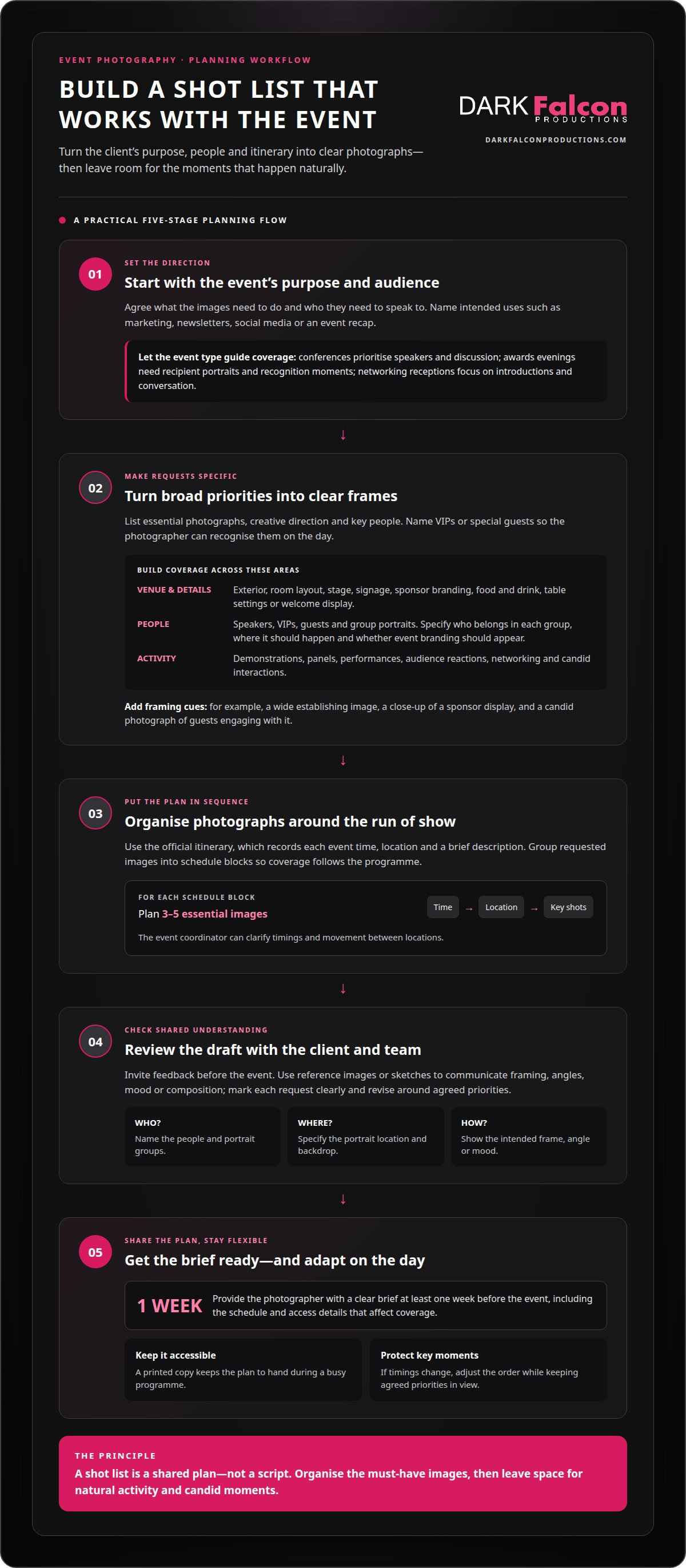
A conference, awards evening and networking reception each need different coverage. Begin with the client’s purpose and audience: a conference may prioritise speakers and discussion, while an awards event needs recipient portraits and recognition moments. A corporate shot list can also clarify which images are needed for marketing, newsletters and social media. The brief should state intended uses, essential photographs and creative direction.
Use a planning meeting to set expectations and identify key people. Name VIPs or special guests on the shot list, and help the photographer recognise them on the day. Group portraits might include the board, speakers, award recipients or a project team. Specify who belongs in each group, where the portrait should happen and whether event signage or branded details should appear. This gives the photographer a practical visual checklist instead of a vague request for “group photos”.
Build the document around the official itinerary or run of show, which records each event time, location and a brief description. Organise photographs by schedule blocks, with 3-5 essential images planned for each block. The event coordinator can clarify timings and movement between locations. Organisers should provide the photographer with a clear brief at least one week before the event, including the schedule and any access details that affect coverage.
Before the event, the photographer can share a draft shot list with the client and team for feedback. Add reference images or sketches to show framing, angles, mood or composition; mark each request clearly, then revise the checklist around agreed priorities. A printed copy can keep the plan accessible during a busy programme. If the schedule changes, the photographer can adjust the order while protecting key moments. For coordinated event coverage, explore professional event photography as part of the planning conversation.
3. Activities, entertainment and candid moments
Candid coverage captures natural, unposed moments as they happen. At a corporate event, that could mean attendees greeting colleagues, listening to a presentation or laughing in conversation. The photographer works around the activity instead of repeatedly stopping guests to pose. The resulting gallery shows how people experienced the occasion, not just what appeared on the programme.
Networking photographs can follow the event from arrival to conversation. Capture guests entering the room, exchanging introductions, talking beside a display and reconnecting with colleagues. Include wide frames that establish the setting alongside closer images showing expressions and interaction. At events for members or clients, candid conversations can convey participation without making every photograph feel staged.
Entertainment and audience reactions add pace to the visual story. During a live performance, photograph the performer in action, the audience watching and moments of applause. For a presentation, include the speaker engaging with the room, attendees listening and a spontaneous response to a key point. At an awards event, capture recipients’ unscripted reactions as they receive their awards, then make time for a posed portrait with each recipient.
A practical list identifies activities worth covering, such as a demonstration, panel discussion, performance or informal reception. It can note the moment to anticipate and the people involved, while leaving space for unexpected interactions. A 70-200 mm lens is recommended for candid event guests photographed from a distance. This lets the photographer work discreetly across a room, capturing expressions without drawing attention away from the conversation. As attendees arrive and the event changes, coverage should adapt to the activity unfolding in front of the camera.
4. What an event photography shot list is
An event photography shot list is a shared record of the images the client and photographer plan to capture. It translates the event’s purpose into specific frames, such as a speaker at the lectern, audience portraits or close-ups of printed materials. Unlike a script, it guides coverage without dictating every action or reaction. The photographer can follow priorities while responding to genuine moments.
For marketing, link each requested photograph to its intended use. A conference recap might need wide images showing the room, speaker portraits and audience interaction. A social post may call for a vertical composition with clear space around the subject. An event photography shot list template provides a starting structure to tailor to the occasion and its communications needs.
A practical checklist can include:
- Subject: the person, activity or detail, such as a keynote speaker or award.
- Composition: a wide view, close-up, candid frame or posed portrait.
- Context: relevant branding, audience, signage or location.
- Purpose: the planned use, such as a newsletter or campaign.
Reference images, sketches and lighting notes can clarify the intended look. The photographer can mark each requested image as captured, keeping progress visible during the event. Adapt an event photography shot list template for each occasion rather than treating one checklist as a fixed script. Separate essential frames from optional ideas so the photographer can stay focused on priorities if the schedule shifts.
A printable version can be a simple checklist in a document. Leave space for timings, names and completion marks so it is easy to scan during coverage, without a complicated PDF.
For a planned approach to event coverage, discuss professional event photography.
Dark Falcon Productions: Events
Dark Falcon Productions provides event photography for occasions where planned coverage needs to serve a clear purpose. The team can bring venue details, key activities, important guests and candid interactions together in a considered visual record.
A focused shot list connects those images to your event’s priorities, whether you need photographs for marketing or a record of the day’s defining moments. Share the schedule, essential people and intended uses so the photography can follow the programme while staying responsive to what unfolds.
When an event calls for a broader creative approach, photography can sit alongside other production needs. Set the scope around the event and the story you want its images to tell.
Contact Dark Falcon Productions to discuss event photography for your occasion.
Make your event coverage work beyond the day
Treat the shot list as the start of an image-use plan, not the final deliverable. Before the event, decide which photographs should tell the story afterwards: a hero image for an announcement, portraits for speaker profiles or candid frames for future social posts. These priorities give the photography a clear role after the venue empties and help create a coherent visual voice across channels. Choose priority images and where each will appear, so later creative decisions serve the same purpose.
An event photography shot list template can also connect event coverage with the content you plan to create next. Dark Falcon Productions offers Creatives, Shorts and social media management to support a joined-up approach to visual content. Consider how event photographs can work alongside those needs instead of treating each piece of content as a separate task.
Contact Dark Falcon Productions today to discuss your event photography and the story you want it to tell. Give your next event a clear creative direction from the outset.
Frequently Asked Questions
What is a shot list?
A shot list is a working record of the photographs planned for an event, with priorities to guide coverage. It differs from a running order: the running order tracks what happens and when, while the shot list describes the images needed. For example, a product launch list might request the reveal, the product in use and invited guests’ reactions.
How do you handle attendees who do not want to be photographed?
Tell the photographer if an attendee prefers not to appear in photographs, and agree a discreet way to identify them. An organiser or event steward can help communicate this without drawing attention to the person. The photographer can then avoid close-ups and identifiable frames of them while documenting the event and other attendees respectfully.
How does a professional photographer plan coverage for a corporate event, conference or awards ceremony?
Shape coverage around the event’s purpose and audience. At a corporate event, priorities may include leadership interactions and brand activity; a conference may centre on panel exchanges and audience engagement. An awards ceremony calls for the announcement, the recipient’s response and the presentation. These distinctions help produce images that support the event’s communications rather than a generic record.
How does a professional photographer customise coverage for weddings, parties and charity events?
Coverage should reflect each occasion’s defining moments and atmosphere. For a wedding, the plan might prioritise the ceremony, family portraits and reception; a party may call for arrivals, entertainment and spontaneous guest interactions. A charity event can focus on the cause, fundraising activity and participant stories. These examples describe photography planning, not wedding video production.
What information should organisers provide to a photographer before the event?
Provide the venue address, access and arrival arrangements, event timings, key people’s names and the on-the-day organiser’s contact details. Explain any photography restrictions, sensitive moments or attendees who should not appear. Share the intended use of the images, such as press coverage or internal communications, so the photographer can frame and prioritise coverage appropriately.
Is there a free printable event photography shot list template or PDF?
A printable checklist can be copied into a document, with space for timings, names and completion marks.