
A financial video can attract attention yet leave viewers unsure what to do next. Effective financial services video marketing needs more than a clear message: it should build trust, speak to the right audience and give viewers a purposeful next step.
It’s understandable to focus on production quality and accurate explanations. Both matter, especially when people are weighing important financial decisions. But the call to action matters too. A useful video connects its message to an appropriate action, such as exploring an idea further, watching related content or getting in touch.
This article explains how financial services videos can communicate brand values, engage social audiences and support a focused content strategy. It also explores how to shape calls to action so they feel relevant to the message, rather than tacked on at the end. The aim is to help viewers move thoughtfully from understanding to action.
Key Takeaways
- Use clear, consistent stories to show what your financial brand stands for and make complex ideas easier to understand.
- Shape short social videos around one useful insight, then adapt the format and message to the audience and platform.
- Build a content plan around viewers’ needs and interests, so each video has a defined role in their decision-making journey.
- Give every video a relevant next step, with a call to action that fits its message and makes the desired action clear.
1. Communicating brand values and building trust
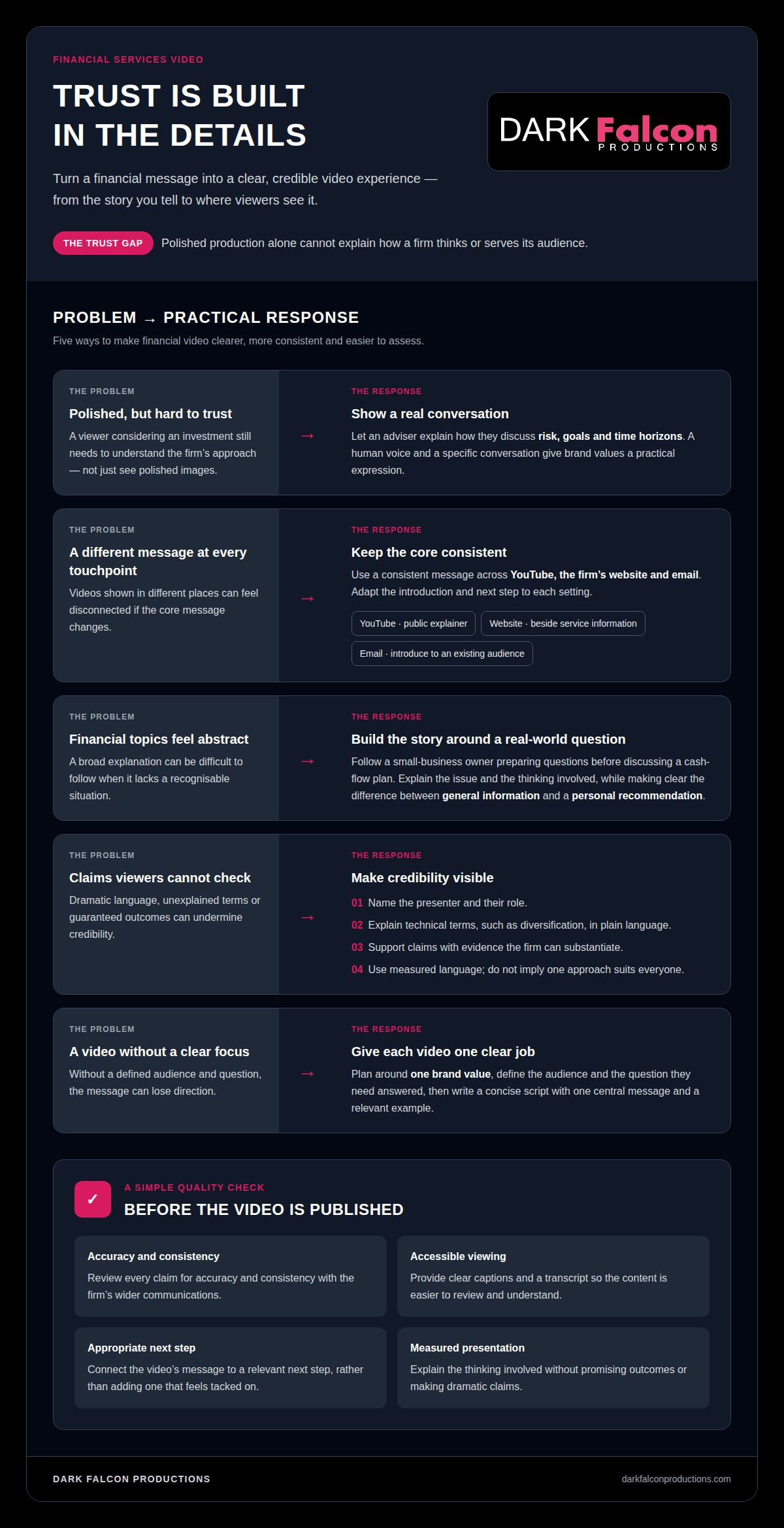
Financial services video marketing can connect a brand’s values with the decisions consumers face. Someone considering an investment needs clarity about a firm’s approach, not just polished images. For example, a short film could show an adviser explaining how they discuss risk, goals and time horizons. A human voice and a specific conversation give the brand’s identity a practical expression.
Trust also depends on where a video appears. YouTube can host a public explainer, while a firm’s website can place a related video beside relevant service information. Email can introduce the same video to an existing audience. Keep the core message consistent across these digital touchpoints, then adapt the introduction and next step to each setting. This creates a coherent brand experience beyond a single platform.
Storytelling makes financial topics easier to follow when it centres on a recognisable situation. A video might follow a small-business owner preparing questions before discussing a cash-flow plan. Explain the issue and the thinking involved, while distinguishing general information from a personal recommendation. Avoid guaranteed outcomes and dramatic claims. Specific, measured language helps viewers understand what the firm stands for.
Credibility comes from details viewers can assess. Name the presenter and their role, explain technical terms such as diversification in plain language, and support claims with evidence the firm can substantiate. A video about investment principles, for example, can explain how risk affects choices without suggesting one approach suits everyone. Clear captions and a transcript also make the content easier to review and understand.
Plan each video around one brand value, such as transparency or accessibility. Define the audience and the question they need answered. Write a concise script with one central message and a relevant example, then review every claim for accuracy and consistency with the firm’s wider communications. This process makes video a credible way to show how the organisation thinks, speaks and serves its audience.
2. Snackable social media and thought-leadership content
A focused social video can make specialist financial education easier to follow. An adviser could explain one budgeting principle, for example, then invite viewers to explore a related topic. Give each post a clear purpose and a consistent point of view. Keep the opening direct, use plain language and make the main insight understandable without sound by adding captions.
Thought leadership works best when it answers a real question rather than simply promoting a service. A series could cover how interest rates affect savings, what diversification means or which questions to ask before investing. Each video should distinguish general education from personal guidance. A clear presenter, considered script and specific example make the message useful without implying one decision suits every viewer.
Distribution shapes how a campaign reaches people. Share an edited clip on LinkedIn, include it in a relevant newsletter or use social media advertising to reach a defined audience. PR can support a campaign when the topic offers a timely perspective, such as an explanation of changing consumer behaviour. Tailor the caption and opening to each channel, then direct viewers to a related resource or next step.
Key risks include inaccurate or overly promotional claims, viewers mistaking general education for personal advice, and content becoming outdated. Financial firms should review scripts and captions before release, retain approved versions and record where campaign content appears. This creates a practical audit trail and helps teams respond consistently if a post is shared beyond its intended audience.
Sharing grows more naturally when a video gives people a useful reason to pass it on. A concise explanation of a common financial term, for instance, can help someone start a conversation with family or colleagues. Make the clip easy to understand, provide a descriptive caption and invite viewers to share it with someone who may find it useful. A planned publishing rhythm can support that consistency; a cohesive social publishing approach helps connect each campaign asset with its intended audience.
3. Financial content strategy and audience targeting
Start with a specific audience and decision point. A first-time investor may need basic explanations, whilst a small-business owner may want to understand account features. Map each group’s questions to a suitable format, such as an interview, animation or concise explainer. A two-minute video can introduce what a small-business account includes, then direct viewers to fuller information.
For UK financial services, LinkedIn, a firm’s website, email and relevant social channels can each serve a distinct role. Use LinkedIn for professional insights, embed explainers beside related website content, and share campaign clips by email. Choose channels based on audience behaviour and the action each video supports, rather than distributing every asset everywhere.
Accessibility should shape the video production workflow from the script onwards. Add accurate captions, provide a transcript, use readable on-screen text and strong colour contrast, and explain important visual information in the narration. These steps help people watching without sound and those using assistive technology. Keep text uncluttered, and check captions against the final edit before publication.
For approval, set clear stages: confirm the audience and objective, draft the script, review financial claims, approve the edit, then record the final version. Keep an approved copy and a record of where each campaign appears. This makes revisions easier when details change and gives teams a consistent reference for future edits.
Video can support several stages of the marketing cycle. An introductory explainer can build awareness, a deeper discussion can help viewers assess options, and a service overview can support a later enquiry. Measure each asset against its purpose using analytics such as watch duration, drop-off points, clicks and completed forms. These signals show which topics hold attention and where viewers need clearer information.
How much does financial services video production cost in the UK? It depends on the project’s scope, scripting, filming, editing and distribution needs; the cost is set out after a quote request. How effective is video marketing for UK financial services firms? Effectiveness depends on audience fit, useful content, suitable distribution and whether the video moves viewers towards its intended action.
4. Calls to action in financial services videos
A financial video needs one clear next step, matched to its message. After an explainer on pension options, invite viewers to read a relevant guide or book a conversation. Avoid asking for an immediate commitment before they understand the subject. A focused call to action helps financial organisations deliver useful content while respecting the importance of the decision.
Choose the action before scripting. For an awareness video, suggest following the channel or watching a related explainer. For a product overview, direct viewers to the appropriate page for fuller details. For an existing client, inviting them to contact their usual adviser may fit better. Each action should be specific, achievable and consistent with the information in the video.
Platform matters. A LinkedIn post can direct professional viewers to a detailed article, while an email video can lead to a relevant landing page. On social platforms, make the action visible in the caption as well as spoken aloud. Some viewers watch without sound, so on-screen text and captions should reinforce the same instruction.
Keep the call to action proportionate. A short budgeting lesson might offer a downloadable checklist; a discussion of investment risk might point to a fuller explanation of risks. Don’t imply that general education is personalised advice or suggest that one product suits every viewer. Clear wording protects the message and gives audiences a sound basis for their next step.
Measure whether the action works, not just whether viewers finish the video. Track clicks to the intended page, guide downloads or completed enquiry forms. Compare those outcomes across platforms and audience groups, then adjust the wording or destination if viewers drop away. A strong video production plan can build this decision into the script, edit and publishing process. To shape a focused campaign around a clear viewer action, plan your financial video content.
Dark Falcon Productions
Dark Falcon Productions helps financial organisations turn audience needs and campaign goals into clear, purposeful video content. When a team has useful expertise but needs a strong narrative, creative development can shape the central message and its call to action. Video production and editing bring the idea to life, while social media management can support consistent publishing across channels.
This is a practical next step when your plans need to connect trust-building stories, concise social content and meaningful viewer actions. Start with the audience, the message and what you want viewers to do next. Dark Falcon Productions can help turn that direction into a coherent video project. Contact Dark Falcon Productions to discuss your financial video plans.
Shape your next campaign with purpose
Choose one audience and one decision your next video should support. That focus gives your creative direction a clear centre, helps each short-form asset serve a purpose, and makes social media management more coherent across platforms. Keep the intended viewer action in mind from the first idea through to publication.
Thoughtful financial services video marketing can become a sustained part of how your organisation communicates, rather than a one-off campaign. Dark Falcon Productions can develop creative concepts, produce Shorts and support social media management, connecting the story with the channels where your audience engages.
Bring your audience, message and intended action into the conversation, then discuss your next video campaign. A focused starting point can give your next financial story the clarity and direction to move forward.
Frequently Asked Questions
What is financial services video marketing and what formats work best?
Financial services video marketing uses video to explain financial topics, introduce services or support audience decisions. The right format depends on the task: an animated explainer can clarify a process, an interview can present specialist insight, and a client story can show how a service works in practice. Choose a format suited to the subject, audience and viewing context.
Which UK regulations apply to financial services marketing videos?
UK financial services videos may fall within financial promotion requirements, depending on the firm, product and message. A video describing or encouraging interest in a financial product needs particular care, even when it appears on social media rather than a firm’s website. Establish who the communication targets and what it promotes, then have the relevant compliance process assess the finished content before publication.
What FCA rules must financial promotions in videos comply with?
Financial promotions within the FCA’s remit must meet the applicable FCA requirements for their firm and product. Review the complete video, including spoken claims, graphics, captions and accompanying post, rather than approving the script alone. Keep a record of the approved version and the channel where it appears, so published material can be traced to its review.
How can financial firms make video marketing compliant and include risk warnings?
Build compliance review into the production process, from script to final edit. Identify claims that need qualification, then place relevant risk information close to those claims and make it readable on mobile screens. For example, a product video should not leave an important warning only in a brief end frame. The firm’s compliance reviewers should assess the wording, visibility and timing in the finished version.
How do financial services firms measure video marketing ROI and engagement?
Measure results against the campaign objective. Track watch time and completion to assess attention, then monitor clicks, enquiries or completed applications to assess action. To assess return on investment, compare attributable financial returns with campaign costs over a defined period. Use tagged links and consistent reporting to distinguish video-driven responses from other activity, and compare performance across audiences and channels before changing the creative.
How can a financial services firm plan and produce a marketing video campaign?
Begin with a defined audience, one communication objective and a suitable next step for viewers. Develop a brief covering the core message, evidence, tone, format, distribution channels and approval process. Then script, produce and edit the video, allowing time for compliance review before scheduling publication. After launch, assess audience response and use the findings to refine future campaign content.