
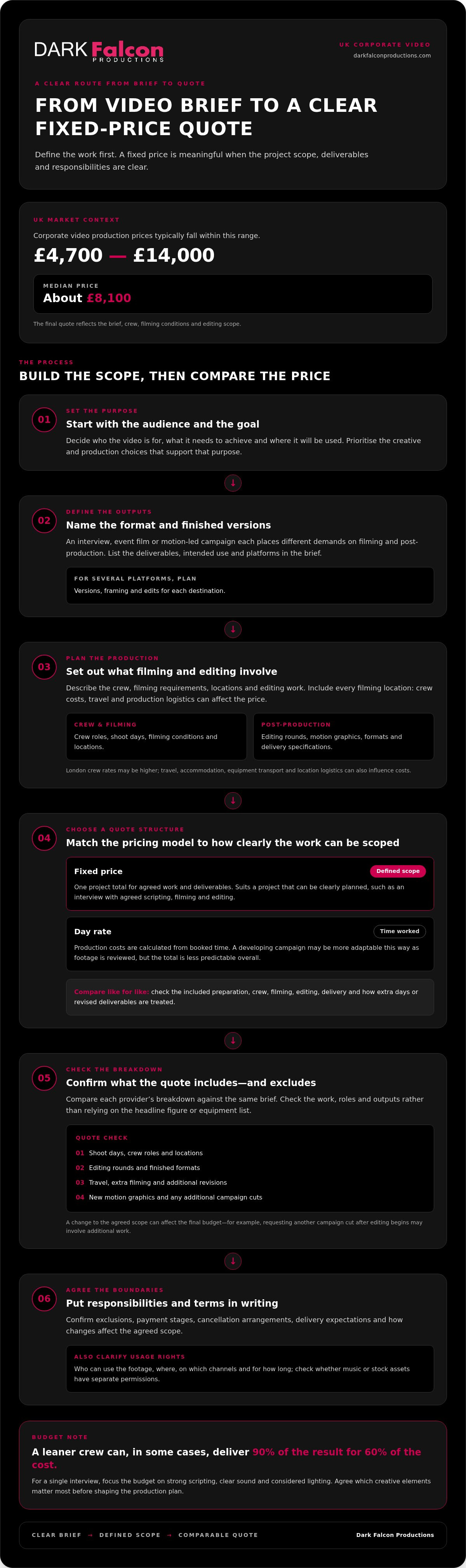
A fixed price is only meaningful when the scope is clear. For fixed-price video production in the UK, corporate video production on the market typically ranges from £4,700 to £14,000, with a median of about £8,100.
It’s understandable to want a firm figure before committing to fixed price video production in the UK. The final cost depends on what the film needs to achieve, the crew and filming required, and the editing and delivery work involved.
This guide explains what shapes production costs, how fixed-price quotes compare with day rates, and when each approach may suit a project. It also shows how clear planning and a focused brief can help you use your budget effectively.
Key Takeaways
- Production costs reflect the scope of the film, from crew and filming requirements to editing and final deliverables.
- A fixed quote sets a defined project scope, while day rates charge for time worked; the right model depends on how clearly the work can be planned.
- Prioritise the audience and purpose of the video to focus your budget on the creative and production choices that matter most.
- Clear pre-production helps align the script, schedule and deliverables, making filming and post-production more efficient.
How Much Does Video Production Cost in the UK?
Corporate video production on the UK market typically ranges from £4,700 to £14,000, with a median of about £8,100. The final quote reflects the brief, crew, filming conditions and editing scope.
Costs by video type and format
Video type and format describe what you’re making and how it will be produced. They matter because interviews, event films and motion-led campaigns place different demands on filming and post-production.
A corporate interview may need one location, a presenter and clear lighting. An event film can involve filming across a changing schedule, while motion graphics require designed and animated elements. Specialist sectors also demand specific approaches; high-end property marketing, such as the visual media produced by hmbdrealestatemarketing.com, typically pairs smooth interior walkthroughs with refined digital assets. A campaign for several platforms also needs planned versions, framing and edits for each destination. Set out the audience, intended use and deliverables in your brief to define the production scope.
Regional price variations
Regional price differences reflect crew costs, travel and production logistics. These factors matter when comparing a shoot in London with filming elsewhere in the UK.
Crew rates may be higher in London, while travel, accommodation and equipment transport can affect a production filmed away from the crew’s base. Working with regional visual media agencies such as Framework Creative can often streamline logistics and reduce travel expenses for shoots outside the capital. The location itself also shapes the work: a central venue may bring access or timing constraints, while a remote site may require more travel planning. Prices can therefore vary, but the project’s location and logistics influence the difference. Include every filming location in your brief.
Quotes, additional costs and package risks
A fixed-price quote sets a cost for an agreed scope of work. Changes to that scope can affect the final budget, so it’s important to understand what the quote covers.
Before agreeing, check the shoot days, crew roles, locations, editing rounds, final formats and delivery specifications. Confirm how the quote handles travel, extra filming, additional revisions and new motion graphics. For example, requesting another campaign cut after editing begins may involve work beyond the agreed deliverables. Fixed price video production in the UK works best when the client and production team share a clear brief, with responsibilities and exclusions set out in the quote.
Fixed price or day rate?
A fixed-price quote sets a total for defined work, while a day rate charges for booked time. The right structure depends on how clearly the filming, deliverables and schedule can be scoped.
Fixed-price quotes and day rates
A fixed price gives you a project total for agreed deliverables; a day rate calculates production costs from the time worked. This distinction matters when deciding how much certainty you need about the scope. An interview with agreed scripting, filming and editing can be quoted as a complete project. A developing campaign may change as footage is reviewed, making time-based work more adaptable but less predictable overall.
Compare the work included, not just the headline figure. Check whether preparation, crew, filming, editing and delivery are covered, and how extra days or revised deliverables are treated. Production companies may structure the same brief differently, so compare equivalent outputs and responsibilities.
Quote breakdowns and inclusions
A production quote breaks a project into stages, roles and deliverables. A clear breakdown shows what you’ll receive and where additional work could arise.
For an interview film, a breakdown might list scripting, a specialist camera operator, lighting, filming, footage selection, editing and final exports. Confirm the filming days, locations, finished versions and revision rounds. Assess relevant examples of completed work, the proposed crew’s roles and their experience with your required format. These details help you judge the production approach, rather than relying on a list of equipment.
Contract terms should set out payment stages, cancellation arrangements, delivery expectations and how changes affect the agreed scope. Usage rights should clarify who can use the footage, where, on which channels and for how long, and whether music or stock assets have separate permissions.
Before signing, compare each production company’s breakdown against the same brief. A written scope makes it easier to identify exclusions, such as travel, extra filming or additional edits. A focused video production brief can help define the work and intended outputs.
Ways to make the most of a production budget
Budget choices shape the story, filming plan and finished assets. Start with your audience and the action you want viewers to take, then prioritise the work that supports that goal.
Choosing a provider to fit your budget
Choose an approach that fits the brief, rather than paying for complexity the film doesn’t need. Crew size, locations and creative detail all influence what the production can deliver.
For a single interview, focus the budget on strong scripting, clear sound and considered lighting. A larger campaign may need several locations, extra crew or graphics. A leaner crew can, in some cases, deliver 90% of the result for 60% of the cost. Agree which creative elements matter most before shaping the production plan.
Promotional video budget allocation
A promotional video budget allocates resources across the work needed to create and use the film. Production is only one part of reaching an audience, so plan for how you’ll share the finished video, too.
For a campaign, prioritise the central film, then plan suitable cut-downs for social channels and a version for your website. Align scripting, filming, editing and graphics with those deliverables. Avoid formats that don’t serve a clear audience or channel. A defined scope connects each production choice to the video’s purpose.
Plan distribution separately from production. Your website, email programme and social channels can all provide destinations for the finished film, while paid promotion needs its own media budget. Decide which channels matter first, then plan the aspect ratios, captions and opening frames each one needs. This helps avoid spending production time on versions you won’t use.
Avoid unnecessary changes by agreeing the message, interview contributors and locations before filming. Providing access details and approving the script on schedule helps protect the planned shoot. Production costs depend on the brief, crew, filming needs and editing scope; the price is set after a quote request.
Pre-production and planning
Pre-production turns a video idea into a practical filming plan. A clear brief sets out the audience, message, locations, contributors and intended formats before filming begins. This helps control complexity: the crew can plan each shoot around the agreed story instead of resolving basic decisions on set.
Scriptwriting gives interviews and voiceovers a defined purpose. Start by stating the key message, then organise supporting points into a beginning, middle and end. A one-hour content planning workshop can help shape topics and deliverables. For a studio interview, the plan might cover questions, presenter, background, lighting and required footage. For a location shoot, include access, timings and contributors.
Plan for reuse before filming. One well-planned shoot day can provide content for a month, if the brief includes several relevant outputs. A single interview, for example, could supply a two-minute web video, a 60-second LinkedIn version, a 30-second social edit and a 15-second trailer. Each format needs a clear purpose, framing and opening moment.
Planning versions in advance can reduce repeated set-ups and keep editing focused. It also gives the crew a shot list for supporting details, such as product close-ups or workplace activity. The finished runtime alone doesn’t show the work involved: a simple talking-head sequence differs from a film with multiple locations, motion graphics or complex camera movement.
Agree the script, filming schedule, locations and final formats before comparing a fixed quote with a day rate. Late changes to the story or deliverables can alter the workload, even if the finished video remains the same length. Identify who approves the script and edits, and how feedback will be gathered. To shape your production brief, plan your video project around its audience, message and intended uses.
Dark Falcon Productions: Creative
Dark Falcon Productions can help turn a clear brief into purposeful video content. Its video production and editing services suit businesses planning a corporate film, promotional video or event coverage. If you need a steady flow of shorter content, Shorts and social media management can support that aim. Creative development helps shape the message and approach before production begins.
Bring a defined audience, objective and intended formats to the conversation. These details help set the project scope and clarify what the finished content needs to deliver. For event-focused projects, Dark Falcon Productions also offers event services and event photography.
Contact Dark Falcon Productions to discuss your video project and creative direction.
Shape your next production around its purpose
Start by defining what the video needs to change for its audience. Fixed price video production in the UK is easier to scope when the purpose, intended viewers and planned outputs are clear from the outset.
That creative direction can also guide what happens after the main film is complete. Dark Falcon Productions offers creative services, Shorts and social media management to help businesses develop and share video content in line with their aims.
Bring your core idea and intended use to the conversation. Dark Falcon Productions can discuss a production shaped around your brief, with the scope and price set after a quote request.
Contact Dark Falcon Productions to discuss your project and take the next step with clarity.
Frequently Asked Questions
Do you charge travel costs?
Travel costs depend on filming locations, access requirements and transport arrangements. A shoot at one accessible site has different logistics from a production involving several locations or specialist travel. The quote should show whether travel is included or charged separately, so you can account for it alongside filming and editing. The total project price depends on the brief and is provided after a quote request.
How does it work?
A fixed-price project starts with a defined brief covering the audience, purpose, filming requirements and finished deliverables. These details shape the written scope and quote. Once the scope is agreed, production moves through preparation, filming and editing, followed by delivery of the specified outputs. For example, a business might define a staff interview, its intended channels and required versions before filming begins. Changes can affect the agreed scope.
What is the average fixed price for video production in the UK?
There isn’t one fixed average for every format. On the UK market, corporate video production ranges from £4,700 to £14,000, with a median of about £8,100. Treat that as a broad market reference, not a quote for a particular brief. A short interview and a multi-location brand film involve different production requirements, so the project scope is essential for interpreting any benchmark.
How much do UK video production companies charge for different types of videos?
Costs vary by format and scope, not just video length. A talking-head interview may centre on scripting, one location and a focused edit; an event film requires coverage of live activity and key moments. Training content may need clear sequencing and graphics, while a campaign can involve multiple versions for different channels. Compare like-for-like deliverables, crew requirements and editing scope when assessing quotes.
What is typically included in a fixed-price video production package?
Inclusions depend on the agreed package, so the written scope should name each stage and deliverable. Look for clarity on preparation, filming time, crew roles, editing, revision rounds and final file formats. It should also identify the finished versions and whether music, graphics or travel are included. For example, a vertical social cut is a separate deliverable from a landscape website edit.
What factors affect the cost of a fixed-price video production quote?
The quote reflects the work needed to deliver the agreed film. Key factors include scripting, crew size, filming duration, locations, lighting, motion graphics and editing complexity. Multiple contributors or versions can add coordination and post-production work. A simple interview in a prepared room differs from a campaign requiring several settings and tailored edits. Defining the intended audience and outputs helps keep the production scope focused.