
The lower-cost option isn’t always the right fit. In the freelance videographer vs production company decision, a freelancer often costs less and offers direct communication, while a production company can bring a wider team, structured project management and broader production responsibilities. The best choice depends on the scale and complexity of your video.
It’s natural to focus on the quote: production costs matter when you’re balancing a creative brief against a set budget. But the fee alone won’t tell you who will coordinate the work, manage changes, maintain continuity or deliver each part of the project.
This comparison explains how the options differ in cost, communication, availability and responsibility for the finished video. You’ll also see when a solo creative may suit the brief, when a coordinated team can help, and which details to clarify before deciding.
Key Takeaways
- Match the production setup to the brief: straightforward, smaller projects may suit one creative, whilst complex work can benefit from a coordinated team.
- Compare what each quote covers, including filming, editing, finished formats, revisions and coordination, rather than judging by the headline fee alone.
- Direct access to a freelancer can make decisions and creative collaboration more straightforward on a focused project.
- Consider availability and continuity alongside the shoot date, particularly when the video is time-sensitive or part of ongoing content.
- Agree who is responsible for planning, communication, footage, project files and usage rights before production begins.
Hiring a Video Company: Freelancer or Agency?
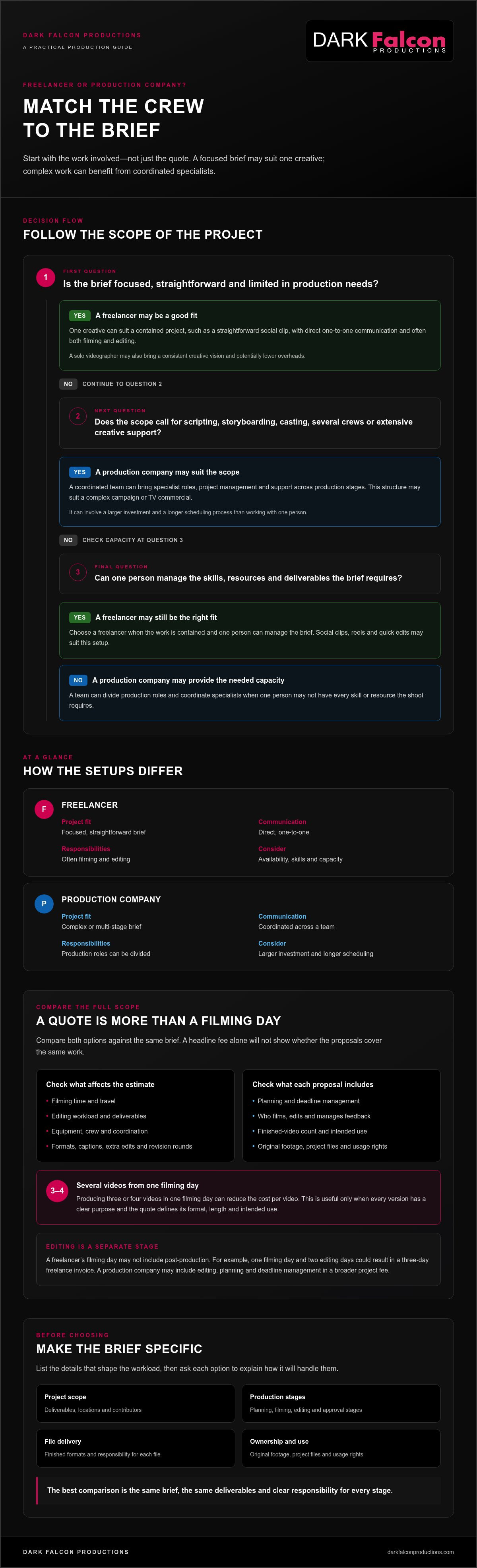
In the UK, a freelance videographer is typically one person who films and may also edit. A production company brings together a team, which may include producers, scriptwriters, editors and camera operators. The crew size depends on the project’s scope.
The freelance videographer vs production company choice comes down to the work involved. One creative may be enough for a straightforward social clip. A complex campaign involving scripting, storyboarding or casting may need coordinated specialists and project management.
A freelancer’s main advantages are direct communication, a consistent creative vision and potentially lower overheads. A solo videographer may suit a small project with a clear brief and limited production needs. The trade-off is that one person may not have every skill or resource a complex shoot requires.
A production company can coordinate a team, manage deadlines and organise feedback across production stages. That structure may suit a major campaign or TV commercial, but can involve a larger investment and a longer scheduling process than working with one person.
Project type matters, too. Brand films, event coverage, social content and corporate updates can be manageable without agency infrastructure when the brief is focused. Social clips, reels and quick edits may suit a freelancer. A project requiring several crews at once or extensive creative support may need a production company; specialist agencies such as Kynda Creative, for example, offer comprehensive live-action video production alongside structured social media content creation.
Before choosing, list the deliverables, locations, contributors and approval stages. One finished interview has different requirements from a campaign that needs multiple edits in different formats. Compare how each option will handle the work, not just the provider’s label.
A freelance videographer vs production company comparison is most useful when you give both options the same brief. Establish who will plan the shoot, film, edit, manage feedback and deliver each file. Clarify what happens to the original footage, project files and usage rights, too.
| Option | Project fit | Communication | Responsibilities |
|---|---|---|---|
| Freelancer | Focused, straightforward brief | Direct, one-to-one | Often filming and editing |
| Production company | Complex or multi-stage brief | Coordinated across a team | Can divide production roles |
Choose a freelancer for a contained brief that one person can manage. Choose a production company when the scope calls for coordinated specialist roles.
In short, a freelancer offers direct collaboration and a single creative vision, but may have limited capacity or skills for complex work. A production company brings team-based resources and structured project management, but can involve more coordination and a longer process. Let the brief, deliverables and responsibilities guide your choice.
What Does a Video Production Company Cost?
Compare the full scope of work, not just the filming day. Editing, deliverables and coordination all affect the final cost.
A freelancer’s price depends on the brief and is provided after a quote request. Filming time, editing workload, deliverables and travel all affect the estimate.
Production company costs
A production company may cost more than a one-person operation because its quote can include a coordinated crew, professional equipment and project management. That investment may cover several production roles, not just filming. Compare the cost per finished video by dividing the project total by the agreed deliverables, then consider whether each asset meets your brief.
Producing three or four videos in one filming day can reduce the cost per video. For instance, a business creating a main film and shorter edits may spread production and coordination across several assets. This makes sense only if every version has a clear purpose and the quote defines its format, length and intended use.
Editing and coordination costs
Filming and editing are separate stages, so a freelancer’s filming day may not include post-production. A video requiring one filming day and two editing days could result in a three-day freelance invoice. A production company may include editing in a broader project fee alongside planning and deadline management.
Coordination takes time, too. A multi-person shoot may require crew scheduling, feedback rounds and clear approval stages. These tasks can add value when several specialists contribute, but they also affect the overall cost. Compare what each quote includes before treating the headline totals as equivalent.
For a useful comparison, list the finished-video count, aspect ratios, captions, additional edits and included revision rounds. Then compare filming, editing, equipment and coordination in each proposal. This helps show whether a lower fee reflects a simpler brief or fewer included tasks.
Consider how changes affect the scope. A new location, extra contributor or additional edit can alter the workload once planning begins. Agree the deliverables and approval process in writing, so everyone is working to the same production plan.
For example, a business commissioning social clips may value getting several formats from one shoot. Another may need one carefully edited interview. Cost per video is a useful measure only when the assets serve comparable purposes and include similar post-production work.
A clear brief aligns filming, editing and deliverables from the outset. Video production planning can help bring those decisions into focus.
Direct communication with a freelancer
Working directly with a freelance videographer gives you one main creative contact. For a straightforward interview, you can discuss the message, filming approach and edit with the person shaping the finished video. That direct exchange can support quicker decisions and greater creative freedom, as feedback doesn’t need to pass through several roles.
Direct collaboration can also preserve a single creative vision. A freelancer filming a corporate interview may understand the agreed tone and carry it through to the edit. In a freelance videographer vs production company comparison, this continuity may favour a solo creative when the brief is focused and decisions are straightforward.
Before filming, turn the idea into a practical brief. Set out the audience, purpose, key message, location, contributors and intended video format. For an interview with a company founder, decide which points the conversation must cover and which supporting shots will illustrate them. A clear brief gives the freelancer a strong creative direction.
Scripting needs a separate conversation. A scripted product announcement requires approved wording, while an informal staff interview may work better with prompts. Agree whether the freelancer will shape the questions, direct the contributor on camera or follow a script your team has prepared. These choices define creative responsibilities before the shoot.
Direct access can make revisions more efficient, but a process still matters. Choose one person in your organisation to gather comments, then send consolidated feedback against the brief. For example, identify an interview answer that needs tightening rather than sending conflicting notes from several departments.
A freelancer’s role varies by project. One may focus on filming and editing, while another may contribute to planning or direction. Define the tasks in the project scope, including who prepares questions, guides contributors, selects locations and approves the final cut. Clear ownership prevents assumptions from shaping production.
A production company may divide communication between a producer, director and editor. That structure can help when a corporate film needs specialist contributions, though messages may pass between team members. The freelance videographer vs production company decision also depends on how your team prefers to share feedback and make creative choices.
Choose a communication model that suits your decision-making. If one person can approve the brief and provide focused feedback, direct collaboration can keep the process close. If scripting, direction and multiple contributors need coordination, define roles and approvals before production starts. This gives everyone a clear route from concept to final edit.
Freelancer availability and continuity risks
A freelancer’s turnaround depends on availability and existing workload. If illness or injury affects a booked shoot, it may need rescheduling, or a fixed-date event could be missed. This risk matters most when the video captures an occasion such as a conference or product launch.
For a time-sensitive shoot, map the schedule before booking. Note the filming date, edit deadline, review window and final delivery date. A product launch video, for example, needs time for filming, editing and approval before launch. A tight schedule leaves less room to absorb delays.
A production company may have a team that supports continuity across a project. This can help a business creating an ongoing series, as project knowledge and responsibilities sit with a team rather than one person. A larger structure may also bring more resources to changing requirements or tight deadlines.
There is a trade-off: production companies may take longer to schedule because their process is more thorough. For an urgent announcement, a freelancer with a suitable opening may be more practical. For a planned campaign with several stages, additional scheduling can support coordination across production.
Turnaround depends on the work after filming, too. A freelancer who films and edits must fit both tasks around other commitments. A polished interview may need careful editing, while event footage may need selecting and assembling before delivery. Agree the delivery date and feedback stages in the project schedule.
Continuity matters when content is repeated. For a monthly series, record the visual approach, interview style, file formats and approval process in shared brand guidelines. For recurring audio-visual programmes, dedicated teams such as Remote Podcast Recording and Production demonstrate how standardised setups ensure seamless continuity across episodes. If a business uses different providers over time, those standards help keep the footage consistent in tone and presentation.
Before production, agree how original footage and project files will be handed over, stored and accessed. This gives the business a clearer basis for future edits or changes to production arrangements. Specify file formats and usage rights in the project agreement so the handover matches the intended use.
Build a practical continuity plan around the project’s fixed dates. Identify which deliverables must arrive first, who approves them and what can be simplified if timing changes. For a conference, prioritise essential event coverage and define the final edit separately. For a flexible brand film, schedule review time before release.
Choose a freelancer when direct availability and a focused brief align. Consider team-based production when repeat content, multiple deliverables or deadline pressure make continuity essential. Either way, a written schedule and clear footage handover can reduce avoidable disruption.
Freelance videographer and production company responsibilities
Freelancer quotes commonly cover filming and editing, while production company quotes can include a coordinated crew and project management. The key distinction is who owns each task, from planning and camera operation to footage protection and final delivery.
Freelance videographer responsibilities
A freelance videographer often handles filming and editing personally, keeping creative decisions close to the camera work. For a filmed interview, the quote might cover the shoot and finished edit, while scripting or extra deliverables may be separate. Set out each responsibility in the agreed scope rather than assuming one fee covers every production stage.
One person may not cover every specialist skill. A freelancer can bring in trusted freelance specialists for work outside their own, such as voiceover or 3D animation. This can extend the creative approach, but introduces another contributor whose role and handover need defining. Agree who briefs that specialist, approves their work and incorporates it into the final video.
Production company responsibilities
A production company can divide work across account managers, videographers, directors, producers, audio technicians, gaffers and editors. For a scripted corporate film, a producer might coordinate the schedule while a director guides performances and an editor shapes the footage. A broader quote may cover connected responsibilities that a solo videographer would manage personally or arrange separately.
Production teams may also use processes to protect footage, such as redundant cards, backup servers and file-naming conventions. Pre-production can include scheduling, scriptwriting and storyboarding. These measures assign responsibility across the workflow, but the quote should still identify who manages approvals, responds to feedback and delivers each agreed file.
Responsibility for materials matters after filming. Agree who retains original footage and project files, which formats will be handed over and what usage rights apply. For example, a business planning future edits needs clarity about access to footage and editable project files, not just the exported video.
Consistency needs an owner, too. If different people handle filming and editing, agree the visual direction, sound approach and naming system before production. For a series of staff interviews, shared standards help each video feel connected, even when separate specialists contribute at different stages.
Before work begins, record the deliverables and responsibility for each stage: planning, filming, editing, feedback, file handover and usage rights. Discuss production responsibilities as part of shaping your video brief.
Dark Falcon Productions: Creative
Dark Falcon Productions helps shape video ideas into creative content for your business. Turn to the team when your project needs a clear concept, short-form content, social media management or event support, rather than a one-off filming decision alone.
For example, a business planning regular social posts can connect short-form creative with ongoing social media management. An organisation preparing an event can also bring event support into its wider content plans. Start with your audience, message and intended use, then align the creative work with those priorities.
If you’re ready to discuss your project, visit Dark Falcon Productions.
Shape your next video brief with purpose
Your freelance videographer vs production company decision can shape more than one finished film. Consider how each video will serve your wider communication: a clear creative direction can connect a flagship piece with shorter content and ongoing social channels.
Before moving forward, write a brief around the change you want the video to support. Define its audience, core message and intended use. Then consider whether the next step is developing the creative, producing Shorts or aligning content with social media management. A focused brief gives the conversation direction and keeps the work connected to your business priorities.
Dark Falcon Productions can support businesses looking to develop creative ideas into purposeful content. Contact Dark Falcon Productions to discuss your next project and take the next step with clarity.
Frequently Asked Questions
Not sure which one you need?
Start with the outcome, then map the work needed to achieve it. A single interview with one speaker points to a contained production; a campaign with several locations, contributors and versions needs coordinated responsibilities. Write down the decisions your team must make, who will approve the final video and which deliverables matter most. This brief helps show whether one creative lead or several production roles better match your requirements.
What About Video Quality?
Quality depends on how well the idea, filming and edit serve the intended audience, not simply on whether a freelancer or company made the video. Review examples with a similar purpose: compare interview sound, lighting, pacing, framing and how clearly each film communicates its message. Consider platform requirements, too. A polished internal training video has different priorities from a public-facing advert designed to hold attention quickly.
How much does a video production company cost in the UK?
A production company’s quote depends on the brief and is provided after a quote request. Key cost factors include crew requirements, filming locations, preparation, editing complexity, number of finished versions and feedback stages. To compare proposals, give each company the same brief and ask for costs by production stage. This makes differences in scope easier to understand without treating unlike deliverables as equivalent.
Which option is best for corporate videos, events, adverts and social media content?
The best fit depends on the production demands of each format. A short social update or simple corporate interview may suit a focused solo shoot. Event coverage needs attention to the running order and important moments. An advert with scripted scenes, several contributors or multiple locations requires more coordination. Decide which moments and outputs are essential, then match the production structure to those demands.
How do freelance videographers and production companies differ in equipment, crew size and production capability?
A freelancer typically works as one creative, bringing the equipment and skills needed for their production role. A company can assemble a crew around the brief, combining camera operation with sound, lighting, producing or editing. A filmed interview may need one camera operator, while a staged advert could require separate people to manage direction, lighting and sound. The right capabilities depend on the roles the project needs.
What should a UK business check in a videographer's portfolio, contract and quote?
Look for work that resembles your intended video, not just a showreel of unrelated styles. A contract should set out deliverables, schedule, payment stages, cancellation arrangements and the process for approving edits. Check filming days, editing, included versions, captions, revisions and travel assumptions in the quote. For a product launch, confirm who supplies scripts, contributors and locations, so responsibilities are clear before production begins.
What insurance, copyright and usage rights should UK clients consider when hiring a videographer?
Ask what insurance cover applies to the planned shoot, location and crew, and establish who is responsible for permissions involving people, premises, music and other supplied materials. Put ownership or licensing terms in writing, including where the finished video can appear, how long it can be used, and whether original footage or editable files are included. These details clarify how your business can use and adapt the work after delivery.
How far in advance should you book a freelance videographer or production company in the UK?
Book once the filming date, location and brief are firm, especially for a fixed-date event or campaign launch. Company planning and crew coordination can extend the lead-in, while a freelancer’s schedule depends on existing work. Allow time for preparation, contributor availability, filming, editing and internal approval. A date alone isn’t a complete schedule: work backwards from publication and reserve time for review before release.