
The strongest recruitment videos do more than announce a vacancy. They give applicants a clearer sense of the work, workplace and people they could work with, helping them decide whether a role suits them. Recruitment and training video production can bring those details to life through employee perspectives and focused, short-form social content.
A job description matters, but it cannot convey the feel of a working day or let candidates hear directly from staff. Videos can fill that gap when they address applicants’ actual questions rather than deliver a broad message intended for everyone.
This article explains how staff recruitment videos can support hiring, how to choose content for your target applicants and what employees can contribute. It also explores how short social videos make recruitment content easier to share, and how a considered production process can create useful material for recruitment and training.
Key Takeaways
- Plan staff interviews around each contributor’s experience so their perspectives complement rather than repeat one another.
- Choose footage that answers the questions your target applicants have about the role and working environment.
- Use real employee stories to make the day-to-day work and workplace culture more tangible for candidates.
- Shape short social videos around the platform and the message, then build on them with fuller recruitment content where useful.
WHY ARE STAFF RECRUITMENT VIDEOS EFFECTIVE?
UK job postings with video receive over 38% more applications. Focused footage can show what a written advert cannot.
Choose three or four staff contributors with different roles or experience. Plan each interview topic in advance so their answers offer distinct perspectives rather than repeating the same points.
Prepare contributors with themes, not a script. Invite each person to speak from memory first, as a natural account can feel more convincing than a rehearsed delivery.
Include full-time, part-time and contract positions where relevant. Explain each arrangement clearly, including its responsibilities, working environment and expectations.
Employee testimonials paired with role-focused workplace footage are effective formats. Together, they show who does the work and what a typical role involves.
In-house filming brings direct knowledge of the organisation and its roles. A UK production company can contribute production expertise and shape interviews, filming and edits around a defined brief.
Before filming employees in the UK, agree on their participation and how the video will be used. Plan how you will handle personal information and footage, especially when staff are identifiable.
Build accessibility into training videos with accurate captions, clear audio and a transcript. These features help staff follow instructions in different settings.
Recruitment video costs depend on the project’s scope, filming requirements, locations and editing. The price varies by project and is provided after a quote request.
Training video costs also depend on the project’s scope, filming requirements, locations and editing. The price varies by project and is provided after a quote request.
Plan production in stages: define the audience, set the message, select contributors, schedule filming, then edit versions for each intended use.
Assess results by comparing video views, applications and completed applications across recruitment campaigns. Track relevant hiring outcomes alongside these engagement measures.
Common risks include repetitive interviews, scripted delivery and footage that misrepresents the role. Planning interview topics and presenting accurate role details help avoid them.
Choosing content around the target applicants
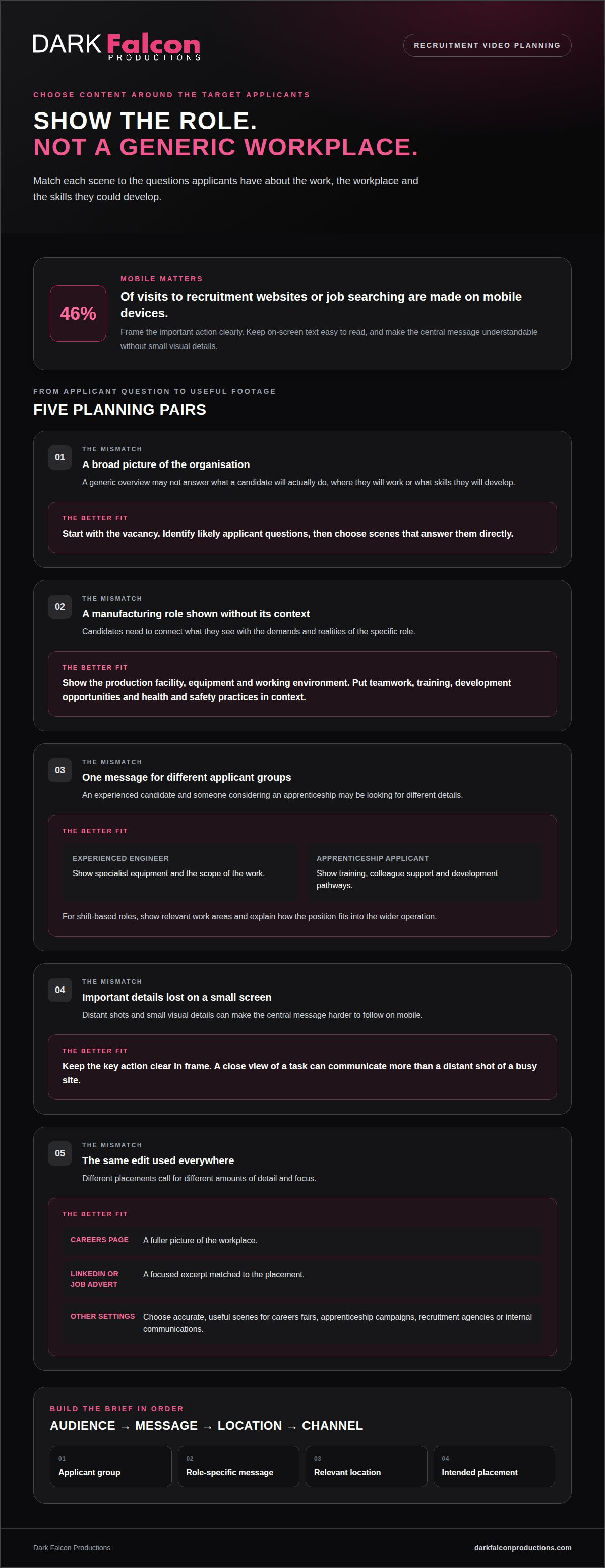
Start with the vacancy, not a generic picture of the organisation. A production role, for example, needs different footage from a maintenance apprenticeship. Identify candidates’ likely questions: What will I do? Where will I work? What skills will I develop? Then choose scenes that answer them directly.
For manufacturing roles, show the production facility, equipment and working environment. Footage can also demonstrate how teams collaborate, how training works and what development opportunities look like. Show health and safety practices in context rather than relying on broad claims. Candidates should be able to connect each scene to the demands and realities of the role.
Choose details to suit the audience. An experienced engineer may want to see specialist equipment and the scope of the work. Someone considering an apprenticeship may be more interested in training, support from colleagues and development pathways. For a shift-based role, show relevant work areas and explain how the position fits into the wider operation.
Mobile viewing also affects content choices. 46% of visits to recruitment websites or job searching are made on mobile devices. Frame important action clearly, keep on-screen text easy to read and make the central message understandable without relying on small visual details. A close view of a task can communicate more than a distant shot of a busy site.
Match each piece of content to its intended placement. A careers page can host a fuller picture of the workplace, while a LinkedIn post or job advert may need a focused excerpt. Recruitment videos can also support careers fairs, apprenticeship campaigns, recruitment agencies and internal communications. Choose scenes that remain accurate and useful in each setting.
Before filming, map each applicant group to a role-specific message and a location that illustrates it. This keeps the finished film relevant without forcing every vacancy into one story. Careful video production planning can bring the intended audience, scenes and distribution channels into one coherent brief.
Featuring real employees and their experiences
Real employees can turn an abstract job description into a recognisable working day. Their accounts can show how they entered a role, what they do now and how their work has changed with experience. Candidates can hear the language staff use, see colleagues interacting and understand how work happens beyond the formal job title. These details make the role and workplace more tangible.
Build each contribution around a specific experience. One employee might explain how they joined the organisation; another could describe a typical task or a new responsibility. For manufacturing roles, show team members at work and discuss progression alongside workplace culture. Specific examples give candidates a more useful picture than general statements about values.
Different formats can bring out different perspectives. NHS England commissioned a recruitment film encouraging dentists to consider Special Care training, using a round-table conversation and individual interviews. The British Psychological Society presented the range of psychology careers through members’ experiences. Both approaches centre employees’ knowledge while keeping the story focused.
Workplace footage adds context to interview answers. East of England Ambulance Service recruitment films showed staff at work, including ambulance control teams handling live calls. The Independent Parliamentary Standards Authority featured staff from across its organisation to introduce roles, the workplace and available opportunities. These examples connect people’s words with visible aspects of their working environment.
Shape the edit around a complete, grounded account. A staff member can describe how they started, share a real example of development, then explain what a normal day involves. Rise Technical Recruitment’s four short-form success stories focused on team members’ experiences and growth. Avoid turning personal accounts into scripted endorsements: retain employees’ own words and keep the everyday realities of the role in view.
Before filming, give each employee a distinct theme, such as joining, learning or progression. This creates a finished film with complementary viewpoints. In the final review, check that every example accurately reflects the role and presents employees’ experiences in context, rather than implying that every candidate will follow the same path.
Creating short recruitment videos for social media
Social videos give hiring teams a concise way to introduce a role and direct candidates towards fuller information. School recruitment videos for social media can be 15-30 seconds long. Use that space for one clear message, such as a teacher describing why they joined or a brief view of a working environment.
Build each edit around a single idea. Open with a person, task or setting that signals the role, then add a short spoken line or caption. Finish with a clear next step, such as viewing the vacancy. Avoid packing several roles, benefits and messages into one clip; separate edits can speak to different applicant groups.
Short clips work best as part of a broader content set. A longer recruitment film can provide context on a careers page, while edited excerpts support LinkedIn posts, job adverts and apprenticeship campaigns. Chiltern Learning Trust produced six staff recruitment videos, showing how a series can give individual roles or perspectives their own focus.
Keep the filming plan efficient. Capture a complete answer from each contributor, then record extra footage to support separate edits. An autocue can help less-confident staff deliver a script accurately, but the delivery should still sound natural. Clear framing and readable captions help make the central message accessible on mobile screens.
Length should follow the message and audience. Candidates typically watch recruitment videos for around 1-2 minutes, depending on how interesting and appealing they are. A social cut can introduce one detail; a longer film can explore role expectations and workplace context. Rise Technical Recruitment commissioned a 90-second hero recruitment video, showing how a focused main film can sit alongside shorter edits.
Plan the core story, then shape versions for each channel and purpose. A considered social recruitment video plan can help align the message, format and destination. For support shaping short recruitment edits and their social presentation, plan social recruitment videos.
Dark Falcon Productions: Video Production
Dark Falcon Productions can shape recruitment video production around your roles, applicants and intended channels. Choose its video production service when you need a clear creative direction, employee interviews and footage brought together into a coherent recruitment story.
For social campaigns, short-form edits can distil a fuller film into focused recruitment posts. Social media management can support planning and presenting that content across social channels. The right approach depends on your message, audience and where candidates will encounter the video.
Bring the vacancy details, audience and key messages together at the outset. This gives the creative process a clear foundation, whether you need a fuller recruitment film or short social content.
Contact Dark Falcon Productions to discuss your recruitment video project.
Give your next recruitment film a clear purpose
Before production begins, decide what candidates should understand or feel ready to do after watching. That decision can guide the creative direction, the balance between a full film and short edits, and the role each piece plays in your hiring activity. It also gives your team a practical way to judge whether the finished content serves its purpose.
Recruitment and training video production works best when the audience and intended use are clear from the outset. Consider how content can support a vacancy now and remain useful as roles, teams or induction needs evolve. A focused plan connects the story to real organisational needs without asking one video to carry every message.
Dark Falcon Productions brings creative thinking, Shorts and social media management to video projects, helping shape content around its intended use. If you’re ready to develop a clear direction for your hiring videos, contact Dark Falcon Productions. A considered first step can turn your recruitment story into purposeful content.
Frequently Asked Questions
What is recruitment and training video production?
Recruitment and training video production creates content to attract applicants and help employees learn or perform tasks. Recruitment films introduce roles and the organisation; training videos explain processes, demonstrate procedures or support induction. For example, a hiring team might produce a film introducing a vacancy, then create a separate instructional video showing new starters how to use an internal system.
What should a recruitment video include to attract candidates?
A recruitment video should give candidates a clear reason to consider the vacancy and a practical next step. State the role or opportunity early, explain its core purpose and make the application route easy to understand. For example, a film for a customer support position could show how the role helps customers, describe the qualities needed and direct viewers to the relevant job advert.
What are the UK rules for filming employees and using video in recruitment?
Agree on employees’ participation and the intended video uses before filming. Plan how you will handle identifiable staff members’ personal information and footage.