
Video case studies for SaaS companies work best when a customer’s experience needs more than a written account to feel clear and credible. Use video when a customer can explain the problem, the change and the outcome in their own words, and keep the story focused on evidence rather than a product pitch. A concise case study can fit into two to three minutes.
A written case study can communicate the facts, but video adds a human voice and a closer sense of how the solution fits into real work. The distinction matters: a SaaS case study should show what changed for the customer, not simply demonstrate software or promote a brand. This article explores how SaaS examples shape that story, when video is a useful format, and what sets a case study apart from other B2B videos.
Key Takeaways
- Build the story around the customer’s challenge, how implementation changed their work, and the results that followed.
- Choose a small set of meaningful metrics, then connect each one to the customer’s experience.
- Use product walkthroughs to show how the software supports the change, rather than letting a demo take over the story.
- Shape the case study around evidence of lasting value, not just a first impression or a list of features.
Should I include video in my B2B case studies?
Include video when a customer can clearly describe a meaningful change in their own words. A strong case study follows three beats: the challenge, implementation and results. Introduce the customer by role and business context, then explain the practical obstacle they faced. This gives viewers a reason to care before they see the product. Keep the customer’s experience at the centre, rather than listing software features.
Build the story in sequence. First, establish what wasn’t working and why it mattered. Next, explain how the customer implemented the product, including the process or workflow that changed. Finally, connect the outcome to relevant business metrics, such as lead volume, revenue or conversion. Choose a small number of figures and give each enough context to be credible. Results carry more weight when viewers understand the original challenge and what changed.
For example, one small SaaS company’s case study reported lead volume rising by 450% and revenue growing by 72%. The conversion rate moved from barely above 1% to nearly 9%. These figures can anchor a video, but the customer’s account should explain the challenge and what changed. Don’t imply that one result caused another unless the customer’s evidence supports that connection. Use the example to show how specific metrics make a customer story tangible.
Keep the finished story concise. Wistia identifies two minutes as the sweet spot for SaaS case study videos; use that time to cover the customer’s challenge, implementation and clearest outcome. For a UK case study, obtain written permission from the customer and each featured speaker. Agree how footage, quotes and business information may be edited and used, and exclude personal or confidential details unless they’re expressly approved.
One recorded story can serve several purposes. Create a full case study for sales conversations, then edit focused Shorts for social media or email. Each cut should preserve the customer’s meaning and a clear result, rather than becoming a product advert. A consistent story across formats builds credibility and gives sales teams a concrete example to share.
Case study storytelling: the problem, what changed and the results
Video case studies for SaaS companies are most useful when they reveal a customer’s decision, not just a positive outcome. Establish the business context first: who encountered the challenge, what was at stake and why the existing approach fell short. This helps prospective buyers recognise a situation they may face. Keep the customer’s own language where possible, especially when it explains the pressure behind the decision.
Shape interview prompts to uncover the turning point. Ask what the team needed the solution to do, how implementation affected existing workflows and what changed for the people using the platform. Invite a concrete example, such as a task that became easier or a handover that worked differently. These details make the story more distinctive than a generic endorsement.
Present results with enough context to make the numbers meaningful. Explain what each metric measures, where it came from and why it matters to the customer. If a result reflects several business changes, say so rather than attributing the full effect to the software. Clearly distinguishing observed outcomes from the customer’s interpretation strengthens trust.
A written case study can add details that a short video cannot accommodate. Pair the film with a concise summary, supporting evidence and a transcript, then keep the customer’s account consistent across formats. Video case studies for SaaS companies should make the central change easy to grasp, even for viewers unfamiliar with the product or sector.
To measure ROI, compare relevant video engagement and sales outcomes with a defined baseline, using analytics and CRM records. Track whether viewers take a useful next step, and note where the video supports a longer buying journey rather than claiming sole credit for a sale. A purposeful video production process can help organise the interview and edit around the evidence that matters.
Video case study prevalence among B2B SaaS companies
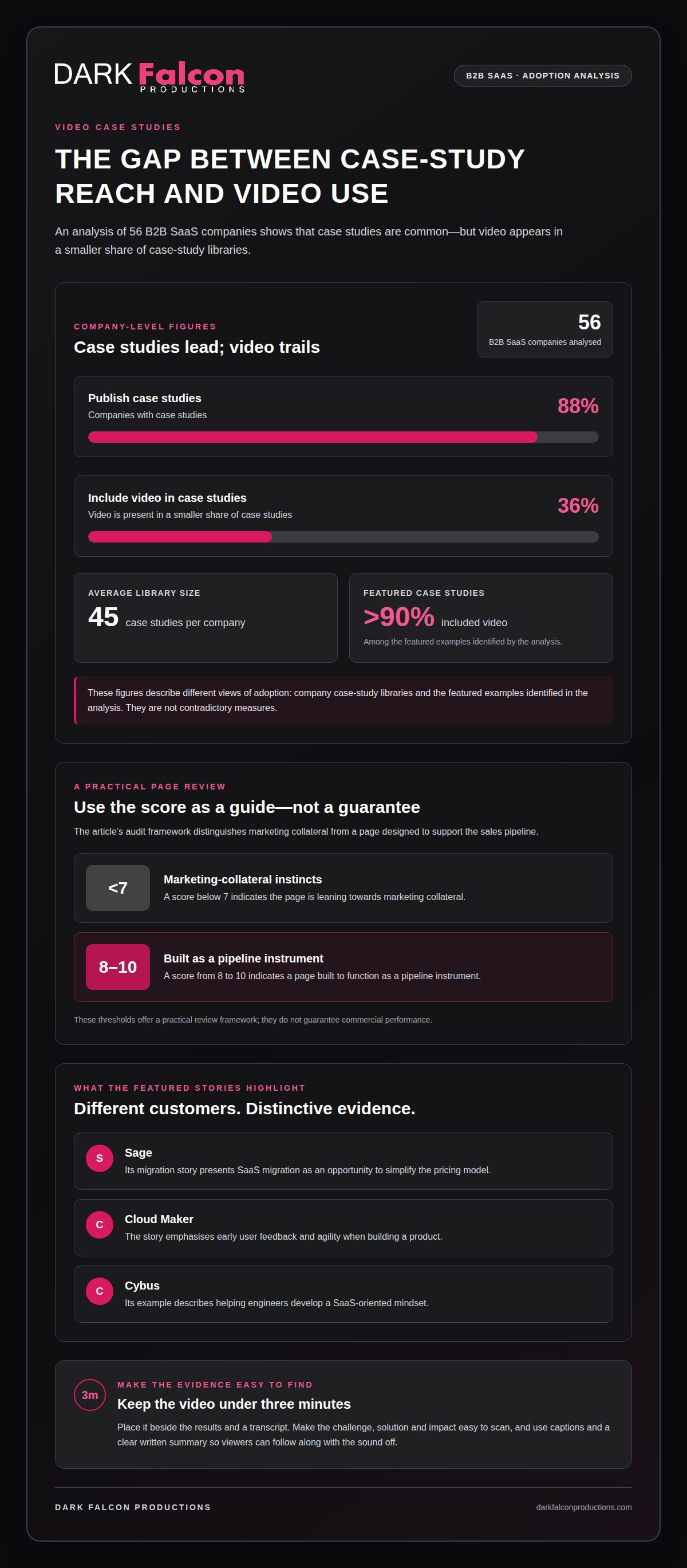
An analysis of 56 B2B SaaS companies found that 88% publish case studies, averaging 45 per company. Yet just 36% include video in those case studies. Video appeared in over 90% of the featured case studies identified by the analysis, suggesting selected examples use it more often than companies’ full libraries do. Treat these figures as different views of adoption, not contradictory measures.
Common mistakes weaken a case study: leading with software features, making unsupported claims or showing a screen without explaining its relevance. Instead, introduce the customer’s situation, use an interview to capture specific decisions and present results with clear context. Sage’s migration story, for example, presents SaaS migration as an opportunity to simplify its pricing model. Cloud Maker emphasises early user feedback and agility when building a product, whilst Cybus describes helping engineers develop a SaaS-oriented mindset.
On a video-led page, place the customer video beside the results and an expandable transcript. Make the challenge, solution and impact easy to scan, then add relevant quotes and supporting details. Ensure the page works with the sound off, too: captions and a clear written summary help viewers follow the story. Keep the video under three minutes and make its key evidence easy to find.
Audit the page for a clear customer context, specific outcomes, accessible video and consistent figures across the screen, transcript and quotes. An audit score below 7 indicates marketing-collateral instincts; a score of 8 to 10 indicates a page built as a pipeline instrument. These thresholds offer a practical review framework, not a guarantee of commercial performance.
In-house production draws on the team’s product knowledge and existing workflows; an agency can bring dedicated interviewing, filming and editing expertise. The right choice depends on internal capacity, desired production quality and how much coordination the team can manage. For examples, compare how Sage, Cloud Maker and Cybus present distinct customer changes, rather than treating one brand as universally best.
How SaaS video case studies differ from other B2B videos
A generic B2B video can introduce a company, explain a service or share a customer endorsement. A SaaS case study has a more focused job: show how software addressed a customer’s business challenge over time. Buyers need evidence that the product continued solving a problem beyond its first 90 days. That makes implementation and sustained use central to the story, not background details.
An effective SaaS customer case study video connects the customer’s original need to how they adopted the platform and the outcome they experienced. Show relevant product workflows, but let the customer’s explanation lead. A screen walkthrough should clarify how the solution fits into real work, not become a feature tour. Use specific numbers when the customer can explain what they mean and how they were measured.
The distinction is clearest when compared with a product demo. A demo shows what software can do; a case study shows what changed for a customer using it. For example, a customer might describe a recurring operational challenge, explain how implementation changed their workflow, then discuss the business results. Ground each step in that customer’s account instead of presenting a generic success story.
SaaS outcomes can depend on adoption and continued use, so don’t treat launch day as the whole story. Ask what happened after implementation, which parts of the product became part of daily work and how the customer assessed progress. Revenue or efficiency claims are more useful when viewers understand the original situation and the process behind them.
Shape the edit around that evidence: establish the customer’s challenge, show the relevant software in context, then let the customer explain the results. This creates a clear difference from brand films, recruitment videos and feature-led explainers. If your team is developing a customer story, plan a SaaS case study video around the customer’s experience and the evidence they can share.
Dark Falcon Productions
Dark Falcon Productions can shape a customer story into clear, purposeful creative content. Start with a defined challenge, the customer’s perspective and outcomes you’re able to share. These elements give the story a strong foundation without turning it into a generic product pitch.
To extend the story beyond a full case study, Shorts can present key moments in a concise format. Social media management can help organise and share those stories across social channels. The right approach depends on your audience, the available evidence and where you want the story to appear.
If you’re ready to develop a customer story for your SaaS audience, contact Dark Falcon Productions to discuss your project.
Make your next customer story work harder
A strong programme of video case studies for SaaS companies starts with a question your next buyer needs answered. Choose a customer whose experience speaks directly to that concern, then plan how the story will travel through your marketing. One interview can become a considered creative asset, with shorter edits and social distribution extending its use.
Dark Falcon Productions can shape the creative direction, produce Shorts and support social media management for customer stories. The goal is a coherent presence, not content for its own sake. Each format should preserve the customer’s perspective and make it easier for the right audience to engage.
Bring your audience, customer story and intended channels into the conversation. Contact Dark Falcon Productions to discuss how you could develop your next case study. A clear story can give your customers’ experience a thoughtful place in your marketing.
Frequently Asked Questions
What questions should you ask customers for a video case study?
Ask questions that reveal decisions, trade-offs and details viewers can recognise. For example: “What alternatives did your team consider?”, “Who needed to approve the change?” and “What surprised you during adoption?” Follow up with prompts such as “Can you give an example?” to draw out specific moments. Invite the interviewee to answer in complete sentences so their comments make sense when edited.
How do you plan, script and produce a SaaS case study video?
First, agree on the audience, central message and interviewee. Then prepare a short, question-led script rather than memorised dialogue. Schedule the interview around the customer’s availability and gather approved product visuals or workplace footage in advance. During production, capture a few alternative answers and pauses between responses. This gives the editor options for a natural, coherent story without changing the customer’s meaning.
Where should you distribute SaaS customer case study videos for maximum reach?
Place the full video on the relevant product or industry page, then share it through sales emails and targeted social posts. A sales representative can send the customer story when a prospect raises the same concern; a social clip can introduce it to a wider audience. Tailor each edit and caption to its channel, and track engagement separately to see where viewers respond.
SaaS case study video production agency versus in-house costs and pros and cons
In-house production draws on product knowledge and existing workflows, while an agency brings dedicated interviewing, filming and editing expertise. Choose based on your team’s capacity, desired production quality and how much coordination you can manage.