
What if your next social video felt like the opening of a film, not another interruption in the feed? For UK brands, short form video production can take considerable effort yet deliver little engagement, especially when the result looks less polished than the brand itself. The answer isn’t simply to post more. It’s to pair a clear creative intention with considered production and a format designed for vertical viewing.
Short-form content moves quickly, but that doesn’t mean it should feel rushed or disconnected. A consistent visual identity, purposeful storytelling and thoughtful editing can help each video feel like a short film for the social era, whilst giving audiences a reason to pause.
This guide covers how to build a repeatable approach to high-quality short-form video, strengthen brand recognition and tell stories that work in vertical formats. We’ll look at opening hooks, platform-aware creative choices, visual consistency and a composed production workflow, so your content feels both considered and suited to how people watch and engage.
Key Takeaways
- Use short form video production to turn individual posts into purposeful brand touchpoints, rather than relying on trends alone.
- Choose production details that help vertical videos feel polished whilst keeping them natural and audience-focused.
- Translate your brand’s values into consistent visual decisions that work across social platforms.
- Use planning, storyboarding and pre-visualisation to clarify the journey from concept to distribution.
- Know what to look for in a production partner who can bring creative craft and social media strategy together.
Mastering the Scroll: Why Short Form Video Production is Vital in 2026
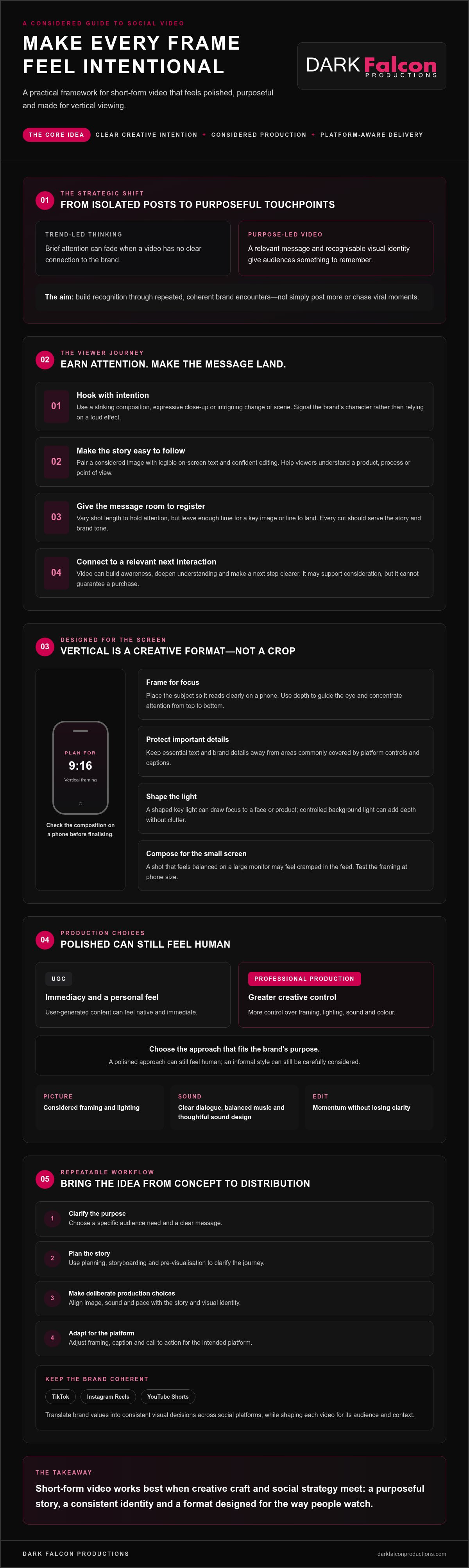
On TikTok, Instagram Reels and YouTube Shorts, vertical video is a familiar way for audiences to discover brands, ideas and products. These channels are examples of an online video platform, a place where video is hosted, shared and watched. For UK brands, short form video production is more than a way to chase viral moments. It can create purposeful brand touchpoints that build recognition through repeated encounters.
That distinction matters. A trend may attract brief attention, but a clear visual identity and relevant message give viewers something to remember. Professional polish doesn’t mean making every video formal or overproduced. It means making deliberate choices about the story, image, sound and pace, so the content feels credible and connected to the brand.
The Psychology of Digital Engagement
The opening seconds often determine whether someone pauses or keeps scrolling. A strong visual hook might be a striking composition, an expressive close-up or an intriguing change of scene. It should earn attention whilst signalling the brand’s character, rather than relying on a loud effect that could belong to anyone.
Short Form as a Strategic Asset
Not every social video needs to disappear with a trend. A well-planned vertical asset can introduce a brand, explain a service or carry a consistent message across a campaign. Its usefulness depends on the idea and context. Plan each video around a specific audience need, then adapt the framing, caption and call to action for the intended platform.
Short-form content can contribute to a wider marketing lifecycle by building awareness, deepening understanding and directing interested viewers towards a relevant next interaction. Connecting video with a broader social media content strategy helps keep the message and visual identity coherent across posts, rather than treating each upload as an isolated task.
Strategic short-form content combines considered production with platform-aware delivery, shaping a purposeful brand story to suit the format and viewing habits of social audiences.
The Anatomy of High-Impact Short Form: Beyond the Fifteen-Second Limit
Short-form doesn’t have to mean low-effort or disposable. Strong short form video production combines a clear creative idea with technical decisions that make the story feel intentional on a small screen. User-generated content (UGC) can bring immediacy and a personal, native feel. Professionally produced vertical video offers greater control over framing, lighting, sound and colour. The right choice depends on the brand’s purpose. A polished approach can still feel human, and an informal style can still be carefully considered.
Vertical Cinematography and Framing
Moving from landscape to 9:16 vertical isn’t simply a matter of cropping the same shot. A wide composition may spread people and important details across the frame, whilst a vertical image concentrates attention from top to bottom. Plan for the format from the outset: position the subject so it reads clearly on a phone, use depth to guide the eye, and keep essential text and brand details away from areas commonly covered by platform controls and captions.
Lighting needs the same attention. A shaped key light can draw focus to a face or product, whilst controlled background light can add depth without clutter. These choices help a video retain a cinematic quality, even on a compact screen. Test the framing on a phone before finalising a setup. A composition that looks balanced on a large monitor may feel cramped in the feed.
Precision Editing for Rapid Consumption
Editing should create momentum without making the message difficult to follow. An invisible cut can remove pauses or join matching movement to keep the viewer immersed. Rhythmic pacing varies shot length to hold attention, while leaving enough time for a key image or line to register. Fast cuts aren’t automatically more engaging. Each transition should serve the story and the brand’s tone.
Sound is part of that craft. Clear dialogue, balanced music and considered sound design make a short video feel complete, whether audiences encounter it through a phone speaker or headphones. Captions can support comprehension when sound is off, but they shouldn’t compete with the image. Consistent colour grading, including considered skin tones, contrast and colour treatment, helps create a coherent brand presence amongst unrelated clips.
For brands developing a repeatable editing approach, understanding how editing choices support attention and identity is a useful starting point. The aim is balance: platform-aware pacing, delivered with professional polish. If you’re considering how that balance could work for your content, explore professional video production as part of your creative planning.
Cinematic Gravity vs. Viral Noise: Elevating Your Brand’s Visual Identity
A trend can give a video a familiar format, but familiarity alone doesn’t make a brand memorable. Use a trend only when it supports your message, audience and visual identity. Otherwise, chasing every new format can make content feel interchangeable. Short form video production should give people a reason to recognise and trust your brand, not just a reason to watch one clip.
That starts with mission-driven storytelling. Before filming, identify what the audience should understand or feel, then express it through one focused idea. A brand built around care, for example, might show the attention behind its work rather than simply state that it cares. In a vertical frame, considered composition, restrained movement and consistent colour can communicate brand values without crowding the screen or making the film feel like a miniature advert.
The Risks of Amateur Social Content
DIY content can feel direct and relatable. The risk isn’t that it’s made in-house, but that avoidable inconsistencies can undermine the impression a brand intends to create. Shaky framing, distracting backgrounds, uneven lighting, clipped captions or a rushed message may suggest a lack of care. Potential clients could read those details as signals of the wider brand experience, particularly when the video sits alongside more polished communications.
A composed presence doesn’t require every post to feel formal. It requires a recognisable standard, even when the tone is spontaneous. Set simple creative guardrails for framing, colour, typography and pacing. Use them to assess whether a trend fits before adopting it.
Building Authority Through Visual Excellence
Professional cameras and lenses can give a production greater control over image detail, focus and perspective. They’re tools, not a substitute for a strong idea. Choose equipment to serve the story and the conditions of the shoot. Professional lighting and considered post-production can also help create a visual signature, such as a consistent approach to contrast, movement or the way people and products are framed.
Repeated creative choices help audiences connect separate videos to the same brand. Instead of relying on logos alone, build recognition through a coherent visual language that works across formats and campaigns. Short-form can then act as an entry point to cinematic brand storytelling, giving audiences a concise first encounter with a deeper story. To explore how to shape that visual language, consider professional video production.
Developing a Strategic Short-Form Workflow: From Concept to Distribution
Consistent output doesn’t come from posting more and hoping something works. A reliable short-form workflow connects the creative idea to the audience, production plan and intended next step. This gives each video a role in the wider campaign and helps the team make deliberate choices from pre-production through to distribution.
Phase 1: Visionary Pre-Production
Start by defining the purpose of each asset. Is it introducing a service, answering a common question or giving viewers a reason to explore further? Set one primary message and one intended audience response. A script for a 30 to 60-second video, for example, might open with a relevant question, develop one clear point and close with a purposeful next step. Keep it focused. Trying to explain everything can weaken the central idea.
Storyboards and pre-visualisation turn that intention into a practical shoot plan. Map out the opening image, key actions, dialogue, captions and closing frame. When visualising complex products or dynamic environments, working with CGI animation and 3D rendering studios like line-creative.uk can bring precision to the pre-production stage. Then check the storyboard in a vertical format, so subjects, products and text remain clear on a phone. Select locations and contributors that feel credible for the brand, and consider how backgrounds, light and sound will support the message rather than distract from it.
Phase 2: Meticulous Production and Post
Good preparation makes a production day more efficient. Group shots by location, setup or contributor, and capture purposeful variations such as an alternative opening line, close-up details and cutaways. These options can support platform-specific edits without asking the audience to watch the same asset everywhere. Keep a shot list, check sound and framing as you go, and leave time to review footage before moving on.
Post-production then shapes the material into a coherent story. Build a first edit around the core message, refine the pacing and clarity, and check that every frame contributes. Captions, sound mix, colour and final framing should work together. Create versions suited to each intended platform, rather than assuming one export will fit every placement. Review performance against the original goal, then use those observations to inform the next brief.
Strategic social media management connects this production cycle to a wider publishing plan. It helps organise assets around campaign priorities, audience needs and a consistent brand presence. A composed workflow makes short-form video production repeatable without making the content formulaic. To plan a disciplined production approach for your brand, discuss your video production goals.
Partnering for Excellence: How Professional Production Secures Long-Term Engagement
High-quality social content takes more than the ability to operate a camera. UK brands need a production partner who can connect creative craft with the realities of social platforms: audience, format, brand voice and the role each video plays in a campaign. The right partner can bring focused creative attention to the work whilst keeping production aligned with the brand’s wider direction.
When evaluating a video production company in the UK, look beyond a showreel. Consider whether its work demonstrates purposeful storytelling, visual consistency and an understanding of how short-form content will be used. Ask how the team approaches feedback, adapts creative ideas for social channels and assesses results. A strong fit should be able to explain not only how a video will look, but what it is intended to achieve.
Collaborative Growth and Mission Alignment
The best partnership begins with shared understanding. A production partner should listen closely to your brand’s mission, challenge ideas constructively and guide decisions with creative ambition and practical care. Filmmaking can bring depth and atmosphere, whilst social media management connects creative work to publishing priorities and audience behaviour.
Professional content can support brand visibility, but it doesn’t guarantee a return on investment. Set a clear objective for each asset and agree how you’ll assess progress. Depending on the goal, useful signals might include relevant reach, viewing behaviour, saves, profile visits or visits to a campaign page. Review those signals alongside the creative, then use what you learn to shape future work.
Over time, this process can build a library of video assets that develops with the brand. A short film for the social era might introduce a new message today, then provide adaptable scenes or themes for future campaigns. Dark Falcon Productions provides professional video production and editing alongside strategic social media management, connecting considered filmmaking to the demands of digital audiences.
Taking the Next Step in Your Content Journey
Start by identifying where your current approach feels disconnected. Perhaps the content lacks a consistent visual point of view, production feels separate from the publishing plan, or each new video begins without a clear purpose. These gaps can show whether your strategy needs stronger creative direction, a more considered production process or closer alignment with social media management.
Moving from tactical posts to a strategic media presence takes shared direction and room to refine the work over time. If you’re planning short form video production for audiences across the UK, explore how Dark Falcon Productions can support your video production goals.
Make Every Frame Work Harder for Your Brand
Short-form video earns lasting value when it does more than capture a passing trend. The strongest approach brings a clear story, a recognisable visual identity and a considered production process together, so each asset contributes to a wider brand presence. Short form video production is most effective when creative craft serves a defined purpose and the content feels native to the platforms where audiences watch.
That balance calls for professional polish and creative ambition in every frame, supported by thoughtful editing and social media management aligned with campaign needs. With a consistent approach, individual videos can become part of a broader library that grows alongside your brand.
Ready to plan purposeful social video for your brand? Contact Dark Falcon Productions to discuss your video production goals.
Frequently Asked Questions
What is the difference between short-form video and traditional commercials?
Short-form video is generally designed for social feeds, where viewers discover content as they scroll, whilst traditional commercials are often created for planned advertising placements. The formats can share strong storytelling and production craft, but short-form usually needs to communicate quickly and feel native to its platform. A brand can use it to answer a question, introduce an idea or build familiarity, rather than relying on a single campaign message.
How often should our brand be posting professionally produced short-form content?
There’s no universal posting frequency that suits every brand. Choose a cadence your team can sustain without compromising the quality, relevance or consistency of each video. Start with your campaign priorities and available content, then review audience response over time. A planned sequence of useful videos may serve your goals better than frequent posts created only to fill the calendar. Keep production and publishing plans aligned.
Can cinematic quality be achieved in a vertical video format?
Yes. Cinematic quality depends on purposeful choices, not a landscape frame. In vertical video, plan compositions around the 9:16 screen, place the subject clearly, and keep important text clear of platform controls. Consider lighting, movement, sound and colour as part of the visual story. For example, a carefully lit close-up with controlled background detail can feel considered and immersive whilst remaining suited to mobile viewing.
What is the ideal length for short-form video production in 2026?
There isn’t one ideal length for every platform or story. Short form video production should give the idea enough time to land, without adding material that distracts from it. In 2026, YouTube Shorts and Facebook Reels allow videos up to three minutes; Instagram Reels limits in-app recordings to three minutes, though some uploads can be longer. TikTok allows up to ten minutes, with longer uploads available in some locations. Check current platform limits before publishing.
How do we ensure our short-form content aligns with our existing brand identity?
Set clear creative guidelines before filming. Define how the brand uses colour, typography, framing, music, captions and tone, then apply those choices consistently across videos. Keep the message true to your brand values, even when adapting a concept to a platform trend. A practical check is to review a video without its logo: if the visual treatment and language still feel recognisable, the identity is doing useful work.
Is it worth investing in professional production for platforms like TikTok and Reels?
Professional production can be worthwhile when the content needs to communicate a considered brand image, explain something clearly or support a wider campaign. It gives you greater control over framing, lighting, audio and editing, whilst still allowing the finished video to feel natural in a social feed. Investment alone doesn’t guarantee reach or results, so set a clear purpose for each asset and assess performance against that objective.
How does Dark Falcon Productions organise the production process for social content?
Dark Falcon Productions provides professional video production and editing, including short films and social media content, alongside strategic social media management. Before filming, clarify the intended audience, message, platforms and desired outcome with the production partner. Agreeing these priorities helps connect creative decisions with publishing needs. Ask how concepts, feedback and final edits will be handled so the process suits your team and campaign.
What are the key metrics for measuring the success of high-end short-form video?
Choose metrics that reflect the video’s purpose. For awareness, review reach and views; for attention, examine average watch time, completion rate and replays. If the goal is interaction, consider shares, saves and comments. For action, track profile visits, link clicks or enquiries where available. Compare similar videos on the same platform and use the results to guide future creative choices, rather than judging success by views alone.