
A social media report should show more than how often a brand posts. Effective social media community management services track engagement, audience growth and sentiment, then use those measures to guide what happens next. Reporting may be weekly or monthly, with quarterly reviews providing a broader view.
It’s easy to focus on likes and follower totals. Those figures matter, but they don’t explain the quality of audience interactions or how people feel about a brand. A useful report connects the numbers to the conversations, content and goals behind them.
This guide explains how social media performance is reported and what to look for in the results. It also shows how organic content, community building and campaigns work together, and how full-service management can bring those activities into a considered approach. You’ll learn what community management includes, how reporting can inform the next step, and how Dark Falcon Productions’ social media management fits into the wider picture.
Key Takeaways
- Match community management to the platforms where your audience is active, and use reporting to spot what needs attention.
- Build organic content around audience interaction, then use what people respond to when shaping future posts and campaigns.
- Bring content, conversations and campaign activity into one coordinated management approach to create a clearer path from planning to performance.
- Understand how monitoring, replies and moderation support an active brand community, and where creative social media management can help.
How do you report on social media performance?
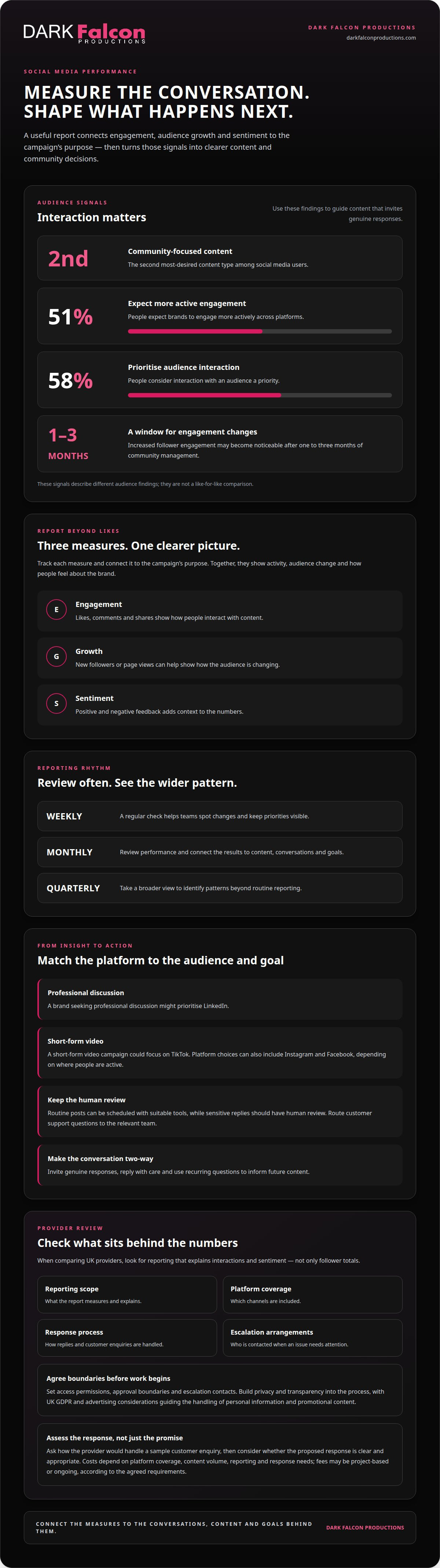
A clear report is a core part of social media community management services. Track engagement, growth and sentiment, then connect each metric to the campaign’s purpose. Engagement includes likes, comments and shares; growth can include new followers or page views. Sentiment reflects positive and negative feedback. Weekly or monthly reviews help teams spot changes, while quarterly reporting can reveal broader patterns.
Choose platforms according to audience behaviour and business goals. Community management may cover Instagram, Facebook, LinkedIn and TikTok, depending on where people are active. For example, a brand seeking professional discussion might prioritise LinkedIn, while a short-form video campaign could focus on TikTok. Schedule routine posts with suitable tools, but keep human review for sensitive replies. Route customer support questions to the relevant team.
When comparing social media community management providers in the UK, consider reporting scope, platform coverage, response processes and escalation arrangements. Check whether reports show only follower totals or explain interactions and sentiment as well. Choose an agency whose approach fits your goals and internal capacity. Ask how it would handle a sample customer enquiry, then assess whether the proposed response is clear and appropriate.
For businesses using social media community management services, outsourcing risks include inconsistent tone, delayed escalation and poorly controlled account access. Set access permissions, approval boundaries and escalation contacts before work begins. UK GDPR and advertising considerations should guide how personal information and promotional content are handled; build privacy and transparency into the process. Costs depend on platform coverage, content volume, reporting and response needs. Agencies may charge by project or ongoing scope, with fees based on the agreed requirements.
Organic social media content and community building
Organic content gives a brand a way to earn attention through relevant posts and active conversation. A clear plan connects audience interests with a consistent, recognisable presence.
Engaging content and conversations
Community-focused content is the second most-desired content type among social media users. Meanwhile, 51% expect brands to engage more actively across platforms, and 58% consider audience interaction a priority. Use these signals to shape posts that invite genuine responses, such as asking followers to share how they use a product. Then make the conversation two-way: respond with care and use recurring questions to inform future content.
Content planning and creation
Planning starts with the audience, the platform and the purpose of each post. A TikTok short, for example, can tell a compact visual story, whilst an event announcement can give followers a clear reason to join a conversation. Each asset should suit its channel rather than simply repeat the same copy everywhere. A creative partner can help shape ideas into platform-ready content; creative social media planning can connect a brand’s message with an intentional visual approach.
Scheduling and approval workflows
A practical workflow takes each post from draft to review, approval and scheduled publication. Assigning an approver and setting a clear review stage helps prevent conflicting edits or missed publishing windows. For example, check a campaign post for its message, imagery and fit with the channel before it goes live. Leave room for timely content, too, so planned posts don’t prevent the brand from responding naturally to audience conversations.
Content calendar management
A content calendar brings upcoming posts, campaign moments and formats into one shared view. Group entries by platform and purpose, such as community discussion, product storytelling or an event announcement. This makes gaps and repeated themes easier to spot before publication. Review the calendar against audience responses and adjust the next cycle. Increased follower engagement may become noticeable after one to three months of community management.
Full-service social media management
Full-service management brings planning, publishing, community activity and performance review into one coordinated operation. That connection matters: a post can prompt a question, a reply can reveal a content opportunity, and the next campaign can respond to both. Set the target first, then assign responsibility for each stage. For example, a product launch needs aligned messages, prepared creative assets, active comment monitoring and a review of audience response.
Day-to-day ownership makes the process clearer. A named community manager can oversee the account, with a senior lead available for escalations. The response window is measured in hours rather than days, while a short weekly check-in keeps priorities and decisions visible. Agree which questions the manager can answer directly, which comments need an approved message and which issues require escalation. This gives followers a more consistent experience without blurring responsibilities.
Account control should also be explicit. The business retains ownership of its social networks, while the management team oversees activity on its behalf. Set access permissions, approval routes and escalation contacts at the start. For example, if a complaint needs an internal response, the manager can flag it promptly, share the relevant context and follow the agreed route instead of improvising a public message.
Review the approach every few weeks and adjust it in response to comments. If followers repeatedly ask about delivery, for instance, the team can consider whether clearer content or a different response is needed. A useful review connects activity with the target, highlights recurring questions and records the next action. Full-service management works best when every decision, from message planning to direct replies, supports the same audience experience and business purpose.
What does social media community management include?
Community management centres on conversations around a brand, not simply its scheduled posts. Social media community management services can include prompt responses to customer enquiries and ongoing conversation management. For example, a manager might answer a question beneath an Instagram post, acknowledge a Facebook comment or direct a detailed product query to the relevant team. Each interaction should be useful and consistent with the brand’s voice.
Monitoring gives that work a daily rhythm. Comments, direct messages and mentions can surface questions, feedback and issues that need attention. Sentiment analysis examines positive and negative online feedback to understand how people feel about a brand and its products. For example, repeated confusion about a product feature may call for a clear response and useful information for future conversations.
Replies need judgement, not just speed. A straightforward opening-hours query can receive an approved answer, while a complaint may need careful acknowledgement and escalation. Moderation also matters when discussion becomes disruptive or strays from community guidelines. Clear response principles help the team distinguish between a genuine question, a sensitive concern and a comment that requires moderation. They also support a consistent tone across Instagram, Facebook, LinkedIn and TikTok.
Community management and content production are related, but they are not identical tasks. Content creation and posting can be separate from community management. That distinction clarifies responsibilities: one activity manages incoming interactions, while the other develops and publishes material. Brands can combine both for a connected social presence, or focus on replies and moderation when content is already in place. Well-defined social media community management services make those responsibilities clear from the outset.
For a more joined-up approach, explore social media management that brings audience conversations into the wider social plan.
Dark Falcon Productions: Social media management
Dark Falcon Productions provides social media management for brands seeking a considered approach to content and audience engagement. Turn to the team when you want social activity to follow a clear creative direction rather than consist of disconnected posts.
Creative development and short-form content can help shape a brand’s message for social platforms. For an event, social activity can also support its story before, during and after the occasion. The right combination depends on your goals, audience and the content you want to share.
Share your priorities, existing channels and upcoming campaigns to start a focused conversation. Contact Dark Falcon Productions to discuss your social media management needs.
Shape your next social move
Your next step is to decide what social activity should make possible for your brand. Set a clear priority, such as developing a stronger creative presence or giving short-form content a more deliberate role. That decision gives social media community management services a useful direction and keeps creative choices connected to their purpose.
Dark Falcon Productions brings social media management, Creatives and Shorts into the conversation around your aims. Begin with the audience you want to reach, the story you want to tell and the role social media should play. From there, you can shape a practical direction for the work without treating every platform or format as a separate initiative.
Ready to define that direction? Contact Dark Falcon Productions to discuss your social media plans. A considered next step can give your brand’s ideas a clearer path forward.
Frequently Asked Questions
How does community management help sales?
Community management can help sales by answering questions that might otherwise delay a purchase. For example, a prompt reply about product suitability can help someone decide whether it meets their needs. It can also reveal recurring objections, such as uncertainty about features or how to use a service. Teams can use those patterns to improve future content and understand which conversations contribute to enquiries.
Who is it for?
It suits organisations whose audiences use social platforms to discover brands, ask questions or share feedback. An online retailer might need help responding to product queries, while an arts venue could use community interaction to support event awareness. Professional organisations can also benefit when their audiences expect clear, consistent responses. The right approach depends on where people engage and how those conversations support the organisation’s goals.
Why stop at Facebook, Instagram and Twitter community management?
These channels may not reach every relevant audience. LinkedIn can support professional conversations, while TikTok offers a different format for short-form video and audience participation. Platform choice should follow audience behaviour and campaign purpose, not habit. A brand can focus on channels where it can contribute consistently, then adapt its message and creative format to each platform instead of duplicating identical posts.
What services do UK social media community management agencies offer?
Services can include monitoring comments, direct messages and brand mentions, responding to enquiries, moderating discussions and identifying sentiment in audience feedback. Some agencies also provide content creation and publishing, while others treat these as separate work. The scope affects how activity is coordinated: for example, a team handling both posts and replies can connect audience questions with future content planning.
How do community managers handle comments, complaints and crises?
Teams sort interactions by urgency and subject, then respond within agreed guidelines. A routine question can receive a direct answer; a complaint may need acknowledgement and a private route for account-specific details. A potential crisis should be escalated to the responsible internal lead, with public replies kept accurate and consistent. Clear approval boundaries help prevent speculation or conflicting messages during sensitive situations.
What response times and engagement metrics should businesses expect?
Set response targets around audience activity, message volume and the team’s agreed coverage, rather than assuming one timing standard suits every brand. Track first-response and resolution times alongside unanswered enquiries and response coverage. Engagement measures can include comments, shares and the quality of discussion, not just totals. Comparing these trends across reporting periods helps show where the team should adjust its approach.