
The smoothest events depend on decisions guests never see. Understanding what an event production manager does means looking beyond the event-day schedule: they coordinate budgets, suppliers, contracts, planning, technical production and on-site logistics, then respond to problems as they arise. Their role is to bring the creative vision and practical requirements together.
Event production is more than a collection of separate tasks. Each choice affects the next: a supplier booking influences the schedule, while venue constraints can shape the design and setup. Clear coordination keeps these moving parts aligned.
This article explains how production managers handle budgets and supplier agreements, organise planning and logistics, and oversee setup, delivery and breakdown. You’ll also see how they work with creative teams and make decisions when plans change, so you can understand where the role adds value to an event.
Key Takeaways
- See how a production manager aligns the creative vision with the budget, venue and timeline when planning supplier agreements.
- Understand how clear coordination connects the event plan, creative team and technical requirements.
- Learn why schedules, floor plans and staffing plans help keep setup, event delivery and breakdown organised.
- Recognise how calm decisions and clear communication help teams adapt when production plans change on event day.
Budgeting and supplier contracts
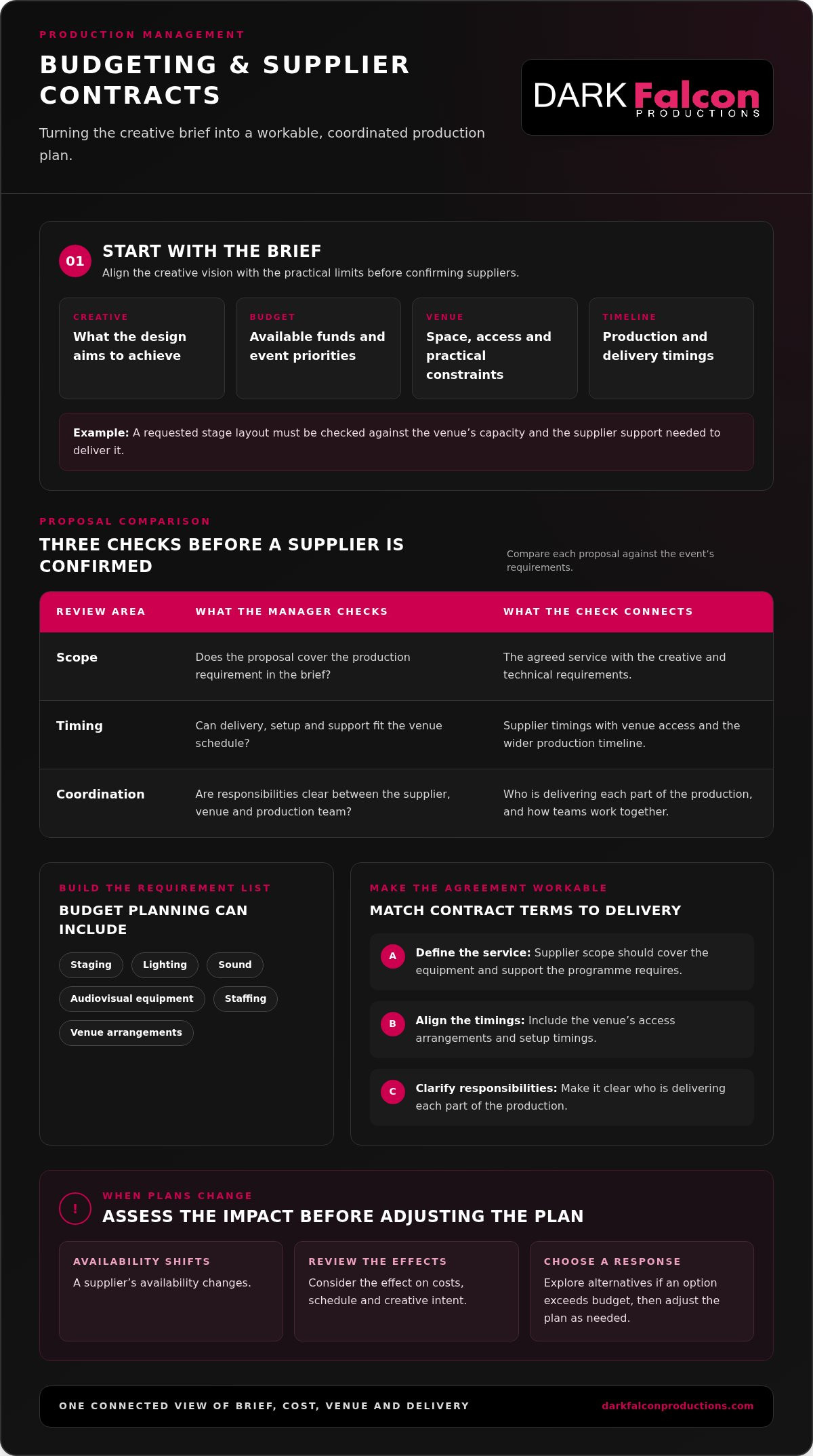
An event production manager connects the creative brief with the available budget, venue and production timeline. They work out what the designer wants to achieve, then map those requirements against practical constraints. For example, if the design calls for a particular stage layout, the manager considers whether the venue can accommodate it and what supplier support it requires.
Budget planning starts by turning the brief into specific requirements, such as staging, lighting, sound, audiovisual equipment, staffing and venue arrangements. The manager can then source suppliers and venues, obtain pricing and availability, and compare proposals with the event’s priorities. If a preferred option exceeds the budget, they can explore alternatives and explain the impact on the design or delivery plan.
Who does an event production manager work with? They liaise with clients, designers, venues, suppliers, contractors and event staff. This connects decisions about the brief, costs, access and delivery rather than leaving them scattered across separate conversations.
Supplier contracts set out the working relationship. The manager may negotiate terms and align agreed services with the event schedule. For example, a sound supplier’s scope should cover the equipment and support the programme requires, as well as the venue’s access arrangements and setup timings. Clear responsibilities help everyone understand who is delivering each part of the production.
Before confirming a supplier, the manager can compare each proposal against:
- Scope: Does it cover the production requirement in the brief?
- Timing: Can delivery, setup and support fit the venue schedule?
- Coordination: Are responsibilities clear between the supplier, venue and production team?
These comparisons help the manager track commitments against the budget and assess changes. If a supplier’s availability shifts, for example, they can consider the effect on costs, schedule and creative intent before adjusting the plan.
The production manager makes sure the designer’s vision fits the budget, venue and production timeline, balancing financial constraints with project requirements. They also book and manage event staff and liaise with contractors and service providers.
Event planning and coordination
What does an event production manager do during planning? They turn the event brief into a coordinated production plan, connecting the client’s objectives with the venue, creative direction, schedule and technical needs. A site visit can reveal practical details that affect decisions, such as equipment positions or how guests will move through the space. These observations help teams prepare before setup begins.
Coordination also includes meetings, site visits and production administration. Managers create and update working documents, then share relevant information with each team. If a programme revision changes a presentation cue, for example, the audio, video and lighting teams may need updated timings. Keeping those timings aligned helps the event run as intended.
An event manager generally coordinates the wider event, including its organisation, marketing, venue, budget, suppliers and logistics. An event producer develops or realises the creative and technical experience. The production manager focuses on making production requirements workable and overseeing delivery. The roles collaborate, and responsibilities can overlap between projects—experienced teams such as Fruitbowl Events Agency often coordinate both full-scale conference planning and technical production to deliver a cohesive experience.
In the UK, entry routes include a degree or higher national diploma in any subject, although some employers prefer an industry-specific discipline. A trainee position or junior role can be one possible route into production management. Useful capabilities include organising details, coordinating teams, communicating clearly and making decisions under pressure.
- Schedule: Connect programme timings with technical and staffing requirements.
- Documentation: Keep design notes, site observations, floor plans and schedules current.
- Communication: Share updates with the producer, designer, venue and production team.
So, what does an event production manager do when a site visit changes the floor plan? They update relevant notes and communicate the revision to affected teams. This gives everyone a shared reference and keeps creative and operational decisions connected as the event takes shape.
Planning may include venue selection, budget setting and client meetings. The production manager handles event administration, including meetings, site visits and the timely submission of debits, purchase orders and check requests.
Production managers need to stay calm under pressure while coordinating teams or handling unforeseen issues, and make effective decisions to create an immersive, memorable experience for attendees. Event managers and producers collaborate: managers rely on producers to realise ideas, while producers rely on managers for resources and information.
Logistics and on-site operations
On-site delivery turns the production plan into a working event environment. The production manager leads pre-production, setup and breakdown with the production coordinator, event producer and designer. Before arrival, they use floor plans, schedules, site visit notes and staffing plans to organise people, equipment and access. Keeping documents up to date gives teams a shared reference.
Before an event, the manager coordinates site planning, vendors, production staff and the venue. During setup, they oversee the build and check that staging, sound, lighting and audiovisual elements fit the planned layout. During the event, they coordinate production activity and address operational changes. After guests leave, they oversee breakdown and removal of production elements from the site.
Technical and creative tasks include coordinating audio, video and lighting systems, alongside staging, set design and visual elements. Lighting positions and sound coverage, for example, need to support the programme and suit the event space. The production manager connects the designer’s intent with the technical teams delivering it.
For UK events, the production manager works with the venue and event team to identify hazards, agree safe working arrangements and follow venue procedures and applicable requirements. The controls depend on the site, equipment and planned activities, such as building a stage or moving equipment through shared areas.
- Before: Review site notes, floor plans, schedules, staffing plans and vendor arrangements.
- During: Coordinate the venue, production staff and suppliers as setup becomes live delivery.
- After: Direct breakdown and ensure the production team follows the agreed site arrangements.
These stages depend on precise coordination. If the floor plan changes during setup, the manager informs affected suppliers and staff, then aligns their work with the updated layout. This helps prevent one team’s adjustment from disrupting another’s installation. The manager also keeps the event producer and designer connected to on-site decisions, so practical changes can be weighed against the intended experience.
Production challenges and problem-solving
Live events can change quickly. A delayed delivery, unavailable crew member or technical fault may affect the running order. The production manager assesses what has changed, which teams are affected and whether the event’s purpose or audience experience is at risk. Calm decisions matter: rushed adjustments can create further problems.
Imagine a presentation where a video file won’t play during the technical rehearsal. The manager works with the relevant team to determine whether the problem lies with the file, playback system or connection. They then consider practical alternatives, such as adjusting the cue or changing the presentation order, while keeping the producer informed.
Every response should account for knock-on effects. Moving a programme item may affect a speaker, technical cue or audience transition. The manager weighs these dependencies, agrees the adjustment with those responsible and communicates the decision clearly. Updating the running order gives the team one shared reference and avoids conflicting verbal updates.
- Assess: Identify the fault, its impact and the decisions it affects.
- Agree: Bring the relevant decision-makers together around a workable response.
- Communicate: Share the change with affected teams and update production information.
Some challenges involve competing priorities rather than equipment. A design adjustment may improve the visual effect but require a different setup sequence. The production manager discusses the practical impact with the designer and producer, then helps the team choose an approach that respects both creative intent and delivery constraints.
Problem-solving also depends on clear, composed communication under pressure. The manager distinguishes urgent issues from those that can wait, keeps relevant people informed and avoids circulating unverified changes. After the event, reviewing what caused a disruption and how the response worked can inform future planning. In this way, an unexpected problem becomes useful production learning.
Dark Falcon Productions: Creative
Dark Falcon Productions brings creative development and event production together for organisations shaping a live experience. Turn to the team when you need support developing an event concept and coordinating its creative direction with practical production needs. Its Events offering supports the event itself, while Creatives can help shape the story and experience you want to deliver.
This is a natural next step when your plans need creative and production thinking to work together. A clear brief covering your audience, objectives and intended atmosphere gives the project a strong starting point. From there, the focus is on aligning the event’s creative purpose with its delivery.
To discuss your event or creative project, contact Dark Falcon Productions.
Shape the next production decision
Understanding what an event production manager does gives you a clearer way to frame your next project. Start by defining the experience you want people to remember, then consider the creative direction and production support that will bring it to life. A focused brief helps your team make purposeful choices from the outset.
Dark Falcon Productions offers Creatives, Shorts and social media management. These services can support the development and communication of ideas around a project, alongside event work. The right starting point depends on what you want to create and how you want to connect with your audience.
If you’re shaping an event or developing a creative project, take the next step and contact Dark Falcon Productions. A considered beginning can give your idea room to take shape.
Frequently Asked Questions
What are the main responsibilities of an event production manager?
An event production manager coordinates the production workstream and keeps its records useful. Responsibilities can include assigning tasks to production assistants, tracking purchase orders and check requests, and keeping the producer informed. If a revised cue affects several departments, for example, the manager identifies who must approve it and who needs the updated instruction. This clarity helps teams understand decisions and responsibilities at handover.
What steps are involved in planning and delivering an event production?
Event production moves from an agreed brief to a delivered event, with decisions at each stage. First, the team establishes the intended experience and production requirements. Next, it resolves practical questions and secures approvals before committing teams to the plan. Rehearsals or technical checks can reveal issues before guests arrive. After delivery, the team records outstanding actions and lessons to inform future productions.
What risks and challenges do event production managers handle?
Event production managers handle disruptions that could affect the schedule, delivery or audience experience. A supplier delay, a change in venue access or a late programme revision can have knock-on effects across teams. The manager identifies which commitments are affected, decides what needs escalation and agrees a workable response with the relevant decision-makers. A single authorised update helps prevent teams acting on conflicting instructions.